Press Release Photo Specs: Size, Format and Captions


October 13, 2026


The essential coverage for a Tech Week event includes keynote and panel video, speaker headshots, founder and sponsor interviews, b-roll, and short social clips, and the first move is booking an experienced event production team and agreeing on content buckets before the schedule locks. We treat every Tech Week booking this way: a single production becomes months of usable marketing, not just a recap reel.
TL;DR:
- Book the production team six to twelve weeks ahead and agree on content buckets before schedules lock; finalize shot lists four to six weeks out.
- For events with simultaneous tracks, assign a lead shooter to each stage and a floating interview team; use lapel microphones with a room mic backup.
- Prioritize the recap and one or two speaker clips for release within the first 48 hours; longer sponsor edits and headshot bundles can follow.
- Collect speaker and attendee releases at registration or check in, and define sponsor license length, usage channels, and approval rights in contracts.
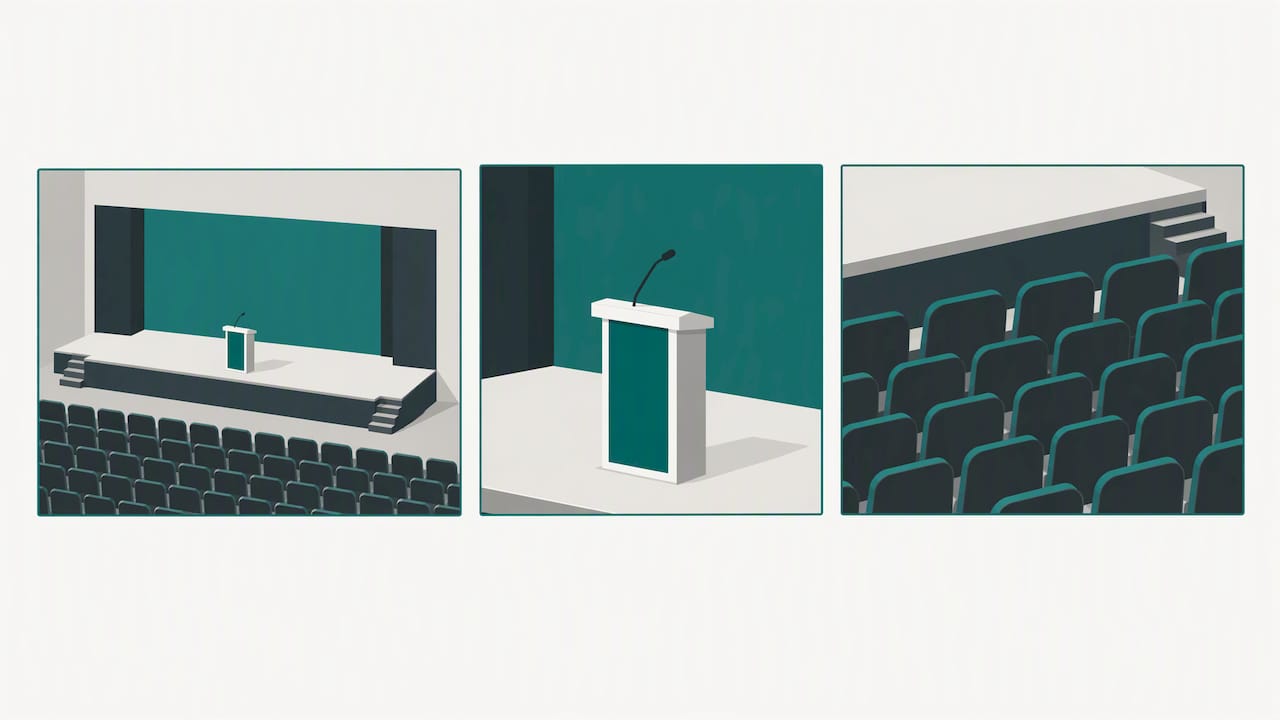
The shot list determines whether Tech Week coverage becomes a content library or a single forgettable recap. Stage coverage needs a wide master shot, tight speaker close-ups, and audience reaction cutaways so editors can cut a clean keynote highlight without gaps.
Interviews carry more long-term marketing weight than most organizers expect. A five-minute founder or sponsor testimonial, shot in a quiet corner away from the stage, becomes a case study, a sponsor deliverable, and a recruiting clip all from one setup.
A dedicated headshot station for speakers and founders solves a problem most events never plan for: inconsistent or missing executive photos for press kits and follow-up outreach.
A Tech Week production runs smoothest when it follows a timeline instead of a to-do list that gets rushed in the final week.
Pro Tip: Send your shot list and sponsor deliverable list to your production team at least two weeks before the event so editors can prep templates in advance.
Crew size should match the footprint of the event, not just the headcount. A single-room meetup might need one photographer and one videographer, while a multi-track Tech Week often needs a lead shooter per stage plus a floating interview team.
Shot-list templates keep crews consistent across tracks: master wide, medium speaker shot, close-up, cutaway to the audience, and a crowd reaction shot for every segment. Audio is often the weak point in event video, so lapel mics on speakers and a boom or room mic as backup protect usable sound even in loud expo halls.
A portable headshot setup with a seamless backdrop and a single strobe can run in a hallway corner with almost no footprint, letting speakers step in between sessions. Fast logging during the event, tagging keynote moments and strong interview soundbites as they happen, shortens the edit window after doors close.
A Tech Week shoot pays off longest when the content buckets are set before the first camera turns on: keynote highlights, founder stories, sponsor clips, and trend commentary each need their own capture plan as explained in our guide to creating a content calendar.
Pro Tip: Prioritize the hero recap and one or two speaker clips for the first 48 hours after the event, while attention is still high.
A few overlooked logistics items cause most on-site production delays. Confirm load-in and load-out windows, power access near each stage, and wifi bandwidth for live uploads before the event week starts.
Clear release and licensing language in vendor agreements prevents disputes over who can use sponsor footage and for how long, which matters most once a clip starts circulating across multiple sponsor accounts.
Most Tech Week organizers plan for the day and forget the three months after it. Our approach at Studio2U starts with minimal-disruption production and ends with a batch of ready-to-publish assets, not a single long recap. Done well, that library extends sponsor value, stretches social reach well past the closing keynote, and gives recruiting teams footage they would otherwise never have.
— Kevin
We built our event packages around exactly this problem: Tech Week generates a short window of attention and a long list of people who need proof of it. Our on-site teams bring portable studios directly to the venue, run headshot booths alongside stage coverage, and aim to turn the footage around quickly enough to publish while the event is still a conversation.

A typical booking includes stage and panel coverage, a dedicated headshot station, founder and sponsor interviews, and a prioritized edit list so the hero recap goes out first. A discovery call before the event sets content buckets, confirms crew size, and locks sponsor deliverable expectations.
Start with a conference services walkthrough to match your event size to the right package.
A typical Tech Week brief covers keynote and panel video, speaker and founder headshots, interview clips, b-roll of networking and booths, and sponsor activation footage. These pieces combine into a hero recap video plus smaller clips for social and sponsor reporting.
Booking six to twelve weeks ahead gives time to align on content buckets, sponsor deliverables, and crew size before shot lists and schedules are finalized four to six weeks out. Waiting until the final two weeks usually limits crew availability and editing turnaround.
Prioritizing a short hero recap and one or two speaker clips in the first 48 hours keeps the event in conversation while longer sponsor packages and headshot bundles follow over the next week or two. Logging standout footage live during the event also shortens the editing window afterward.
Speaker and attendee releases should be collected during registration or check-in, and sponsor contracts should spell out license length, usage channels, and any exclusivity terms for deliverables. Complex multi-sponsor licensing is worth a quick check with counsel before signing.
Yes, a dedicated on-site headshot station alongside stage coverage is a common add-on that gives speakers and founders usable executive portraits without a separate shoot. It runs in a small footprint, often a hallway corner with a backdrop and one light, and fits into the same production day.
