How to Schedule Headshots at Work Without the Chaos


October 5, 2026


Environmental headshots are the right call for most teams that want portraits doing double duty as marketing assets: they capture professionals in their real workspace, producing authentic, brand-aligned images that work on LinkedIn, team pages, and press releases alike. This guide walks through what they are, when to choose them over a studio setup, and how to plan, shoot, and deploy them well.
TL;DR:
- Environmental headshots are most effective for workplaces with well-designed, visible spaces that support the company’s brand story, such as startups or consultancies.
- Pre-shoot planning like wardrobe guidance, decluttering backgrounds, and scheduling in advance can significantly improve efficiency and final image consistency.
- Most team shoots take ten to fifteen minutes per person, with natural or portable lighting and simple instructions to achieve natural, professional expressions.
- Light retouching, consistent cropping, and standardized metadata ensure cohesive results suitable for LinkedIn, web, or press use.
- Hiring a production partner streamlines multi-location or large-team shoots, ensuring fast turnaround and uniform quality across all images.
An environmental headshot is an on-location portrait that includes meaningful elements of the subject’s workplace: a desk, a whiteboard, a product bench, a collaborative space. A studio headshot isolates the subject against a plain backdrop with no context at all.
The visual differences show up fast once you compare the two side by side:
Both formats serve LinkedIn profiles, team pages, and press kits, but environmental images carry more of the company’s story in a single frame.
Environmental headshots add a storytelling layer that a plain backdrop cannot. A laptop, a sketch, or a tool in frame gives the portrait a short, legible narrative about the subject’s role without turning it into a staged scene, and that context helps clients and candidates read professionalism into the image before they ever meet the person.
The practical upside for a marketing or HR team:
Preparation such as wardrobe coordination and background decluttering materially affects shoot efficiency and final-image consistency, which matters more in an office than in a controlled studio. A studio portrait is still the better call when brand guidelines demand an identical, interchangeable headshot grid across hundreds of employees, or when the output is a press portrait with strict formatting rules.
Environmental headshots fit best when the workplace itself supports the brand story:
They’re a weaker fit when a tight, uniform brand identity system is non-negotiable, or when the deliverable is a formal press portrait with strict technical specs. The best timing lines up with a rebrand, a hiring campaign, or a fundraising announcement, when fresh imagery needs to go out fast.
A clean shoot day starts with scoping decisions made a week or two in advance.
Pro Tip: Send wardrobe and location guidance in writing at least a week out, so nobody shows up in a shirt that clashes with the brand palette on shoot morning.
Natural window light works well for environmental portraits, but most offices need at least one portable light to fill shadows or balance against mixed fluorescent and daylight sources. Framing should keep the subject sharp while letting the background stay soft enough to read as context, not clutter.
Pro Tip: Keep a simple prop on hand, a laptop, a notebook, a tool, so a subject has something to do with their hands instead of standing stiffly for the camera.
Retouching should be light and consistent: skin smoothing, color correction, and minor blemish work, applied the same way across every subject so the team looks like one cohesive set rather than a patchwork of editing styles.
Every project we run starts with a discovery conversation: what the images need to accomplish, who the audience is, and which spaces in the office actually support the brand story. That conversation shapes where we set up, not the other way around.
We bring portable studio equipment directly into the workplace, which keeps the day moving without pulling a team out of their normal environment for hours. Because the gear travels with us, we can produce the same visual standard whether we’re shooting a ten-person startup team or a multi-office enterprise rollout.
We prioritize fast editing turnaround so teams can publish new headshots and branding photography while a launch, a raise, or a hiring push is still generating attention, rather than weeks after the moment has passed. We’ve built this workflow around startups, venture and accelerator ecosystems, and enterprise teams that need consistent imagery across several locations at once.

Authenticity doesn’t mean messy. The most common mistake we see is a team swinging too far toward “candid” and ending up with cluttered backgrounds or inconsistent lighting, when the goal is a polished portrait that happens to include real context. The fix is almost always better prep, not a different photography style. Hiring a production partner makes sense once you need this done across more than a handful of people or more than one location; a single founder portrait is a fine DIY candidate.
— Kevin
We offer a few packages built for exactly this kind of shoot. Our START UP package suits smaller teams booking their first on-site session, while our STANDARD branding package and ENTERPRISE package scale up for larger or multi-location teams. A BRANDING ADD-ON extends any session with additional office lifestyle and branding imagery.
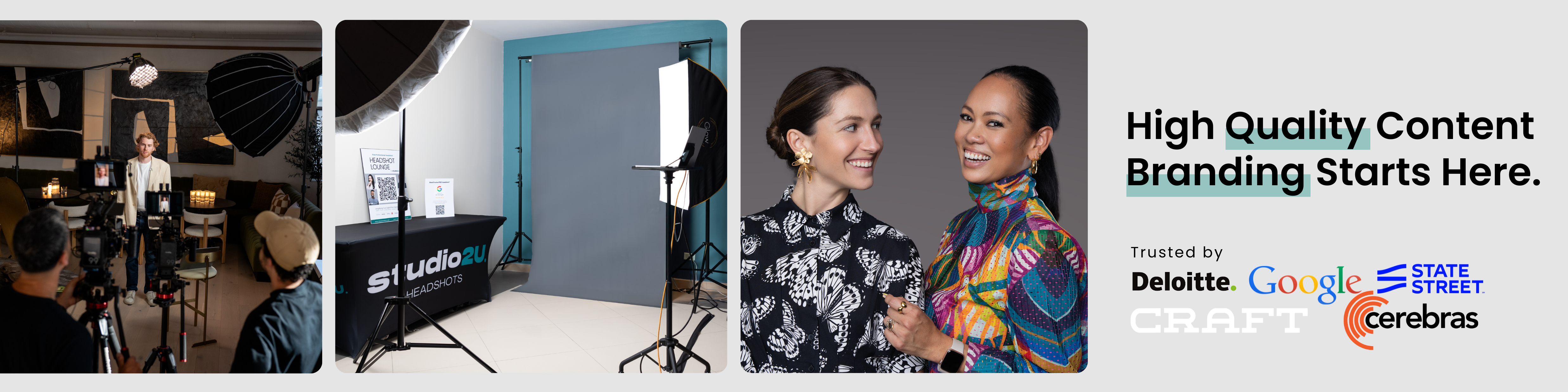
Every booking starts with a discovery call to confirm goals, locations, and headcount, and we bring portable studio equipment directly to your office so the day runs without disrupting normal work. You’ll leave the shoot with headshots, team imagery, and branding assets ready for fast editing and delivery.
Reach out through our home page to schedule a discovery call and get a date on the calendar.
An environmental headshot includes real elements of the subject’s workplace, like a desk or a collaborative space, instead of an isolated backdrop. The setting adds context and a short visual story about the subject’s role.
Most batched sessions run about ten to fifteen minutes per person once lighting and location are set, based on typical scheduling for large team shoots. Total shoot time scales with headcount and the number of locations used.
A coordinated, consistent color palette across the team reduces editing time and keeps the final set looking unified, so most companies send wardrobe guidance in advance rather than leaving it to chance. Clashing colors or busy patterns are the easiest problem to avoid with a short note sent before shoot day.
Yes, as long as the images meet the technical specs that press outlets typically require, such as resolution and file format. Confirming PR-ready requirements before the shoot avoids a second round of exports later.
For current prices of our packages and add-ons, please visit the pricing page on our website.
A few more guides round out the planning and prep work covered above.
