5 Zone Event B-Roll Checklist: Editor-Ready for Conferences
%20(1)%201.png)
.png)
.png)
September 7, 2026
%20(1).jpg)

Prioritize one thing above everything else in a startup product launch video: land the value promise in the first 6 to 8 seconds, then shoot everything so it can be recut into five or six other formats. A strong hook without a reuse plan wastes a shoot. Below you’ll find real examples worth studying, a planning checklist, and the production routes that fit different budgets.
TL;DR:
- The first 8 seconds must clearly state the value promise, as viewers decide whether to continue watching almost immediately.
- For maximum effectiveness, plan for four main video formats: a 60-90 second hero, 30-60 second social cutdowns, 15-30 second vertical clips, and 6-15 second ads.
- A single half-day shoot with a detailed shot list and proof visuals can produce multiple assets, including a hero video and 6 to 12 social clips.
- Shooting with pre-planned reusability in mind simplifies editing and ensures footage can be repurposed across channels and formats.
- Startup budgets for explainer videos typically range from $35,000 to $50,000, with DIY options suitable only for early, low-stakes launches.
Watch a handful of launches on repeat and patterns emerge fast. Public collections like Launch Gallery sort videos by style, which makes side-by-side comparison easy instead of hunting across YouTube and Product Hunt separately.
Here’s what to study and steal from each style:
Rewatch each one with a stopwatch. Note the second the value promise lands and the second the CTA appears. That gap is your benchmark.
Five traits separate the launch videos that convert from the ones that just look nice.
Industry guides on startup video marketing consistently point to the same combination: short runtimes paired with planned repurposing rather than one long video stretched across every channel.
Pro Tip: Write your hook line before you write anything else in the script. If it can’t survive being read out loud in under 8 seconds, it’s not tight enough yet.

Most startups need four formats, not one video stretched to fit four places.
If budget or time forces a choice, skip the hero video before you skip the vertical cutdowns. Short-form gets more daily impressions during launch week than a polished 90 second film sitting on a landing page nobody visits yet.
A simple cadence works for most launches: tease the product a few days out, publish the hero video on launch day, then release cutdowns daily for the following week.

Every shoot should start with three questions on paper before anyone touches a camera: What’s the one-sentence value promise? What three visuals prove it? What deliverables does each shot need to produce?
| Planning Step | What It Produces | Time to Complete |
|---|---|---|
| Message brief | One-sentence value promise | 30 minutes |
| Shot list | 6 to 12 setups mapped to deliverables | 1 to 2 hours |
| Script skeleton | Hook, proof, CTA outline | 1 hour |
| Pre-shoot logistics | Location, talent, product readiness | Half day |
Tech product video planning follows the same logic whether you’re filming software or hardware: know the deliverable before you know the shot.
DIY works when the founder is a confident on-camera presence and the goal is authenticity over polish, think an early waitlist launch where a raw screen recording and a laptop mic genuinely fit the brand.
AI-assisted tools now handle a surprising amount of the repetitive work. Clueso Agents can detect a product update and autonomously record and edit a fresh demo video, which matters for startups shipping features weekly. Tools cataloged on G2’s AI video generator category can turn screen recordings into polished edits in minutes. What these tools generally can’t do is replicate the trust that comes from a real office, a real customer’s face, or a founder shot with intention rather than a webcam.
A studio partner earns its cost on brand-critical launches where the video represents the company to investors or big buyers. Guides on startup video budgets put product-driven explainer productions in the $35,000 to $50,000 range depending on animation and shoot complexity, though a live-action launch shoot with a portable studio setup typically costs less than a fully animated explainer.
Ask any vendor: how many deliverables come from one shoot day?
Ask: who owns the raw footage for future cutdowns?
Pro Tip: Never book a studio without asking how many social cutdowns are included in the base price. A hero video alone at full studio rates is a bad deal.
A single well-planned half-day shoot can generate a hero edit plus 6 to 12 social clips when each camera setup maps to a named deliverable ahead of time. That’s the model studio2U builds around: real product-in-use footage, real customer moments, and executive portraits captured in the same visit rather than three separate bookings.
On-location shoots at the client’s actual office tend to produce more trust than staged studio backdrops. Startups also often pair launch video days with quick PR-ready branding photos since the crew and lighting are already set up. Templated cutdown workflows mean the first assets can publish within days, not weeks, while launch attention is still fresh.
The most common mistake is a feature dump. Founders try to explain everything the product does instead of the one thing it does better than anything else. The second is shooting without a reuse plan, then scrambling to cut six formats from footage that was never framed for it.
Fix both with one habit: shoot with the cutdowns already storyboarded before the camera rolls. Run a small test shoot before your next launch and see how much easier the editing gets.
— Kevin
studio2U offers an on-site shoot designed from the start to feed multiple channels such as websites, social channels, sales decks, and investor updates at once. They bring a portable studio directly to offices, combining headshots, product shots, and video production in one session.
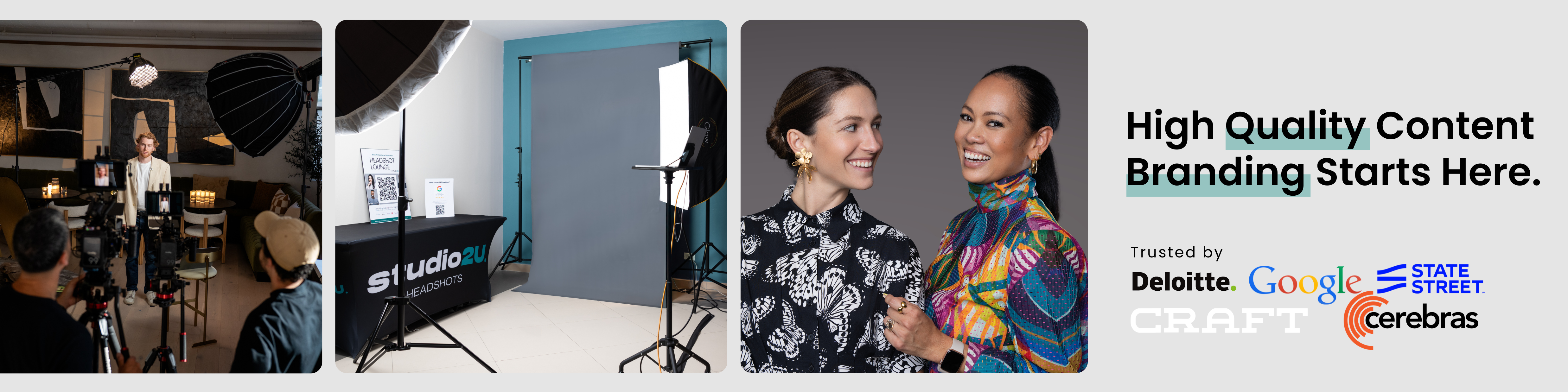
Startups typically walk away with a homepage hero video, a set of social cutdowns ready for launch week, and investor-ready footage from a single shoot day. If your launch is on the calendar, get a quote through studio2U to learn more about what one shoot day can produce.
A hero video should run 60 to 90 seconds, with social cutdowns trimmed to 6 to 30 seconds depending on the platform.
The value promise, stated plainly, before any logo animation, music build, or founder introduction.
DIY works for early, low-stakes launches where a founder is comfortable on camera; a studio partner like studio2U makes more sense for brand-critical launches tied to funding, enterprise sales, or major press.
Product-driven explainer-style productions typically range from $35,000 to $50,000 depending on animation and shoot complexity, while a live-action launch shoot usually costs less.
A well-planned half-day shoot with deliverables mapped to each camera setup can produce a hero edit plus 6 to 12 social clips.
