Portfolio Company Photography: A Guide for PE and VC Teams


November 4, 2026


Post-merger photography is the set of headshots, team photos, leadership portraits, office images and short video that show two organizations as one company. The most effective way to do it is to shoot everything in a single coordinated program, on site, under one set of written photo guidelines, instead of letting each legacy team keep using its old images. This guide covers what to shoot, in what order, how to handle people and locations across both companies, and where the new images should go.
On the day a deal is announced, the new company has a problem that has nothing to do with its legal structure. Its website shows one team in blue-gray studio portraits, the other in casual office snapshots. The investor deck mixes two styles. A sales rep’s LinkedIn photo is from 2017. Everyone who looks at the company, whether a prospect, a candidate or a lender, reads those differences as a sign of how well the integration is going.
Integration playbooks treat communications as its own workstream across the first days, the first 30 days and the 30 to 90 day window. Burnie Group’s post-merger integration checklist breaks the work into those phases, with marketing and communications focused on positive messaging and keeping stakeholders informed. Photography belongs in that workstream. It is slow to produce when rushed, easy to schedule early, and it feeds nearly every other deliverable: the website, the press release, the recruiting page, the pitch deck.
Two practical points shape everything below:
The visual approach depends on which model you are using.
| Brand model | What it means | What the photography should do |
|---|---|---|
| Single master brand | The acquired company’s name retires and everyone operates under one identity | One look for everyone: identical backgrounds, framing and lighting |
| Parent with subsidiary brands | Legacy brands continue under a shared umbrella | Shared technical standards (lighting, crop, retouching) with room for brand-specific color or setting |
| Transitional brand | Both names appear together for a defined period | Matching portraits now, with a plan to re-shoot or re-crop at the final name change |
If your team is still debating this, bring the question to a short working session with leadership from both companies. A marketing-led plan can help here; the 100-day post-acquisition marketing plan approach is a useful frame for deciding which communications must be ready on which day.
If you are keeping subsidiary brands, the question of how much individuality to allow is a design question as much as a photo question. Balancing one corporate identity with distinct subsidiary expression is easier when the photo rules are written down, because they let each brand express itself within clear limits.
The research on acquisitions is worth keeping in mind at this step. A 2022 Journal of Marketing study, summarized by the American Marketing Association, found that consumers may react negatively when they see an acquisition as a loss of a brand’s unique, authentic values. The same research indicates that the reaction can be softer when the original leadership stays, when the brands’ values align, or when the acquired brand is young or oriented toward growth. For photography, that points to a clear choice: if the acquired company’s founders and leaders are staying, show them. Portraits of familiar faces in the new visual system communicate continuity better than a press line saying so.
A repeatable system beats a one-off shoot. Without written standards, the next hire, the next office and the next freelancer will drift back to their own style within a year. Central governance of identity and design, with room for local teams to adapt within it, is a pattern that communications professionals describe in global organizations; a PRSA interview with a ZF Group communications leader makes the point that local teams have flexibility while corporate identity, design and brand issues need central governance.
A workable one-page guide covers:
The broader corporate headshot guidelines we publish cover most of these points in more depth and are a good draft to adapt.
Most teams under-scope the first shoot and then pay again for a second one. Here is a practical asset list, ordered roughly by how soon you will need each item.
A useful rule: shoot for reuse. Every image should have an owner in marketing, a known home in the asset library and at least three intended uses before the day of the shoot.
This is where post-merger photography gets difficult. You are scheduling two sets of employees, sometimes across multiple states, who may not know each other and who are worried about their jobs. Some practical principles:
| Window | Photo workstream |
|---|---|
| Signing to close | Agree brand model, draft photo guidelines, build the roster, shortlist locations |
| Day 1 to day 30 | Shoot leadership portraits and a group photo; update the announcement page and press kit |
| Days 30 to 60 | Run the company-wide headshot program, office by office; capture team and culture images |
| Days 60 to 90 | Shoot case study and recruiting content; replace legacy images on the site, in email signatures and in decks; archive old files |
That sequence mirrors the phased integration approach in the Burnie Group checklist mentioned earlier, in which communications work moves from Day 1 messaging toward longer-term consolidation. Your own deal may compress or stretch it.
Shooting is half the job. The other half is replacing the old images consistently, quickly and in every place they live.
Build one central library first. Consolidating digital assets in a single location during an M&A process helps maintain consistency across channels and makes future rebranding easier. You do not need dedicated software to start: a well-organized shared drive with locked permissions, clear folder names and one named owner is enough for many mid-sized firms.
Use a checklist of surfaces. Typical places that still show old photos weeks after launch:
Set a sunset date. Announce a date after which legacy photos are retired from official channels. Without a date, both styles live on indefinitely.
Sequence the reveal. Employees should see the new brand and their own portraits before the public does. Internal communication first, then customers and partners, then press and social. That order protects trust, which matters because the AMA-reported research above shows that how an acquired brand’s values appear to be treated shapes reactions.
Not every merger is welcomed. Some employees and customers of the acquired company will feel something is being taken away. A few ways to let photography help rather than hurt:
Our perspective
We shoot a lot of teams in the weeks after a deal closes, and the pattern is consistent: the companies that do best treat photography as part of the integration plan, not a marketing afterthought. The first set of portraits is the first time many employees from the two sides stand in the same visual frame. If that session is organized, respectful and quick, it sets a tone.
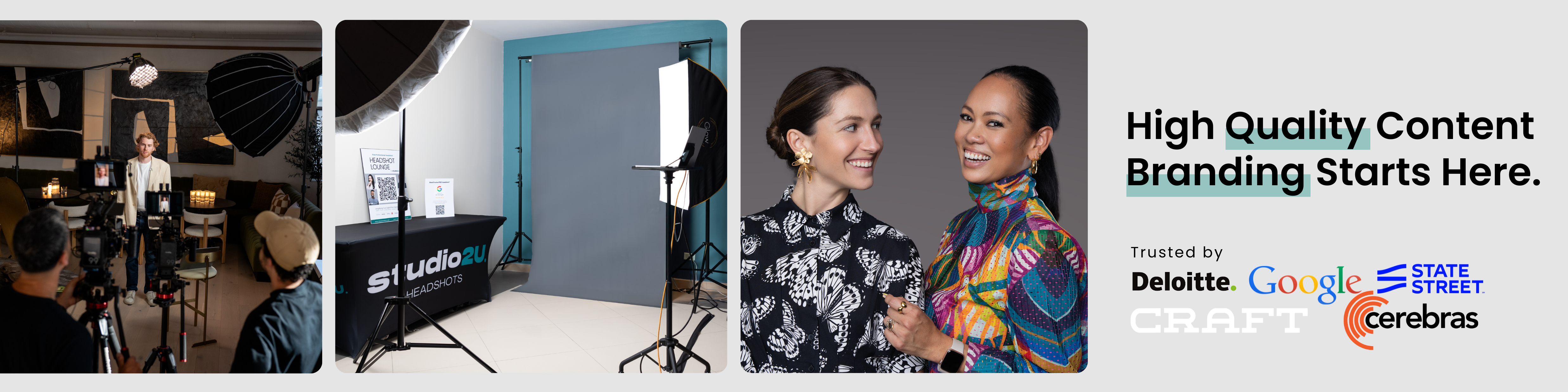
Our approach starts with a strategic discovery call. We ask what the combined company is trying to say, who needs to see it (customers, investors, candidates, the new employees themselves) and which offices and events are involved. Then we bring portable studios to each location so the lighting, backdrop and retouching match from Boston to Austin to the Bay Area, without pulling people away from their work for a day.
We design every project so the assets keep working: leadership portraits for the announcement, team photos for the website, case study content for sales, recruiting images for the careers page. Real people and real customer outcomes build trust faster than generic staged imagery, and in a merger, trust is what the market is looking for.
Kevin
For corporate teams, our published shoot pricing is fixed per shoot and varies by team size and frequency. Our START UP shoot is $2,500 per shoot. STANDARD starts from $2,000 per shoot and ENTERPRISE from $3,500 per shoot, and a BRANDING ADD-ON is available for $1,000 per shoot. If your merged company is also hosting a leadership summit or an all-hands event, our NETWORKING ($2,500), SUMMIT ($4,500) and CONFERENCE ($8,000) event packages are priced per shoot as well. Our shoots include live photo viewing, retouching and a five-day turnaround.
If you are planning a company-wide program across two sets of offices, start with our STANDARD and ENTERPRISE branding shoots, or contact us through our site to talk through the scope.
Tell us the locations, the headcount and the launch date, and we will propose a shoot plan that fits your integration timeline.
Before you book, confirm these items:
Plan it at signing and shoot leadership as early as the brand decision allows, often in the first weeks after close. Book the company-wide headshot program for the first 30 to 90 days, once titles, offices and the roster are final. Booking early matters because multi-office scheduling takes the longest.
If the portraits differ in background, crop and color, they will look inconsistent side by side, so most merged companies re-shoot everyone for the website and public channels. If one legacy team already follows the style you are adopting, you can keep those images temporarily and match the other team to them. Set a date to complete the transition.
Use the same lighting setup, backdrop, framing and retouching standards at every location, ideally with the same photographer or production team. A portable studio brought to each office makes that practical. Written guidelines keep later shoots matching the first round.
Start with the website team and leadership pages, LinkedIn, email signatures and the sales and investor decks, since those are the places prospects, candidates and investors look first. Then work through press kits, job boards and event materials. Keep every approved image in one central library.
