Secure Five Day Delivery: Photo RFP Checklist for Procurement Teams
%20(1)%201.png)
.png)
.png)
September 24, 2026
%20(1).jpg)

The best approach for Class A building headshots is an on-site, brand-calibrated photography program governed by a written procurement brief. That brief should lock down visual standards, insurance and vendor onboarding, and delivery specs before anyone books a photographer. Consistency across leasing materials, directories, and tenant portals depends on it. Start by drafting a procurement checklist and scheduling a test shoot to confirm the space works before committing to a full rollout.
TL;DR:
- Consistent on-site, brand-calibrated headshot programs require a detailed procurement brief covering visual standards, operational hurdles, and approval processes to ensure uniformity.
- Building lobbies are unreliable for photography due to lighting unpredictability and foot traffic, making dedicated, controllable rooms the preferred choice for shoot spaces.
- Standardizing shoot specifications, including background, lighting, cropping, and retouching, is essential for cohesive images across directories, marketing, and executive bios.
- Delivery of final images must follow a clear retouching scope, file format specifications, proper naming, metadata, and a five-business-day turnaround to maximize usability.
- Multi-site headshot programs benefit from documenting a gold-standard process and centralized editing to maintain quality and brand consistency across different properties and locations.
A Class A designation isn’t just a leasing term. Buildings that earn this rank compete for premier tenants with above-average rents, high-quality finishes, and advanced building systems, according to BOMA International’s building-class framework. That status carries an implicit promise: everything tenants and prospects see should look as polished as the lobby marble.
Portraits are one of the few pieces of visual content that touch nearly every tenant-facing channel a building operates. A single headshot might end up in:
When those portraits come from a dozen different photographers, phone cameras, or years-old LinkedIn photos, the mismatch is obvious the moment they are placed side by side. Lighting shifts from warm to cold, crops jump from tight headshots to loose environmental shots, and backgrounds range from a gray cubicle wall to a blurred conference room. PropertyShark’s coverage of building classifications makes a point worth applying directly to photography: building class is a relative market measure, and a property’s finishes and systems should shape every production decision made inside it, including how portraits get planned and shot.
Most inconsistent headshot programs fail for a boring reason: nobody wrote down the standard before the shoot happened. A procurement brief fixes that by turning vague expectations into contract language a vendor has to meet. Building teams that skip this step usually find out the hard way, three months later, when tenant photos from two different departments look like they came from two different companies.
Build the brief around three categories:
Pro Tip: Put the test-shoot sign-off in writing as a contract milestone, not a courtesy. If the vendor can’t match your lighting and crop spec on the first five subjects, you want a contractual off-ramp before 200 more people get photographed the wrong way.
Vendors that already build their workflow around discovery calls, test shoots, and on-site proof selection tend to hit these milestones without friction, since that structure is standard for reputable on-site headshot providers. If a vendor can’t describe their approval process before you ask, that’s a red flag worth noting during the bid stage.
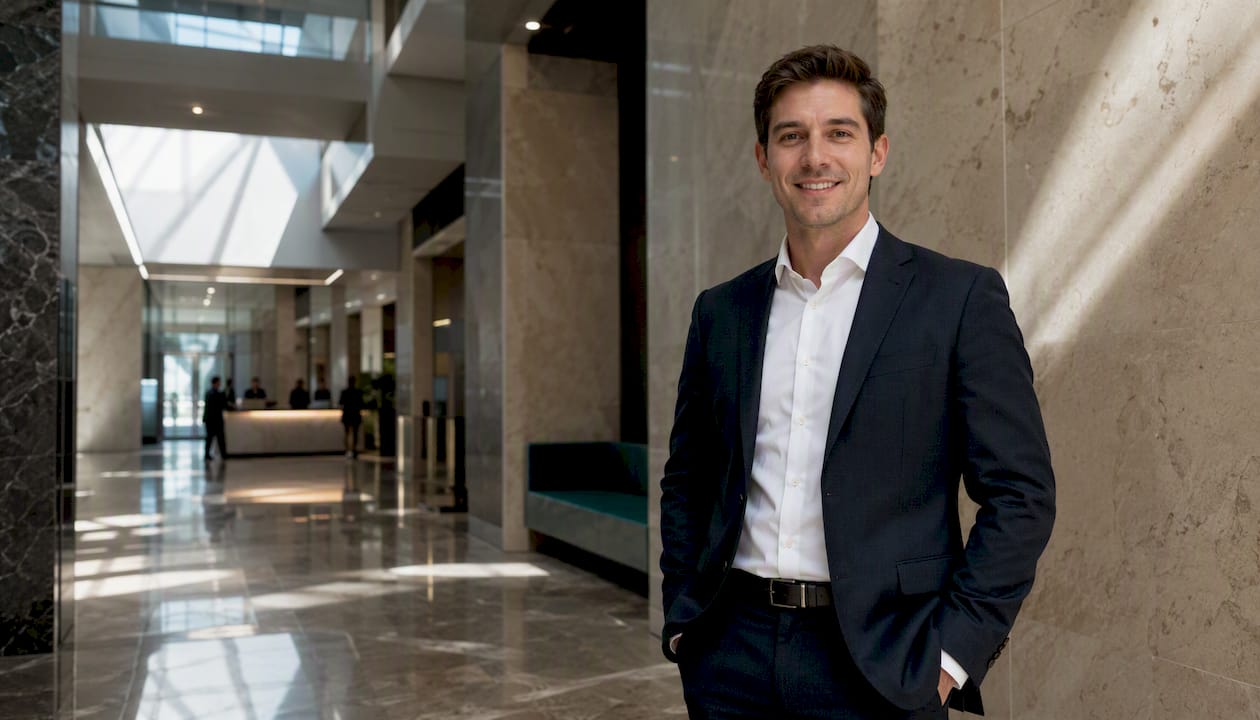
The room matters more than most building teams expect. A conference room with a blank wall, controllable overhead lighting, and no foot traffic will outperform an impressive marble lobby almost every time. Lobbies look better in person than they do on camera. Reflective stone throws unpredictable color casts, mixed color temperatures from skylights and fixtures fight each other, and a security desk fifteen feet away turns every session into a slow negotiation with pedestrian flow.
Throughput planning is the second variable that determines whether photo day goes smoothly or runs three hours over. Plan for roughly 10 to 20 minutes per person, depending on whether you’re shooting simple directory portraits or more involved environmental executive shots. For company-wide programs with 100 or more subjects, running two parallel stations cuts total time in half without sacrificing quality, provided both stations follow the identical lighting and crop specification.
Before locking the date, coordinate on:
None of this is complicated. It just has to happen before the crew arrives, not during setup.
Not every portrait needs to look the same, but every portrait needs to belong to the same visual family. The choice usually comes down to where the image will live.
Uniform, neutral backdrop shots make sense for:
Environmental portraits, shot against the building’s architecture, a window view, or a branded lobby element, work better for:
If a building runs both styles in the same program, the trick to keeping them coherent is locking one variable across both: usually the color grade and the retouching philosophy, even if the crop and background differ. For directory shots, aim for a head-and-shoulders crop, a distance of roughly six feet from subject to camera, and soft, even front lighting. For environmental shots, pull back to a three-quarter or full-body crop with directional lighting that flatters the architecture without overpowering the subject’s face. Backdrop planning guides can help teams map out which spaces support which style before the crew shows up.
The photo shoot is only half the job. What arrives in the delivery folder determines whether the program actually gets used or sits ignored in a shared drive.
At minimum, each subject should receive:
Most professional on-site programs deliver a five-business-day turnaround from shoot date to final files, which keeps the images useful while the shoot is still fresh in tenants’ minds rather than arriving weeks after everyone has forgotten it happened. Full delivery format specifications should be part of the brief, not an afterthought negotiated after the invoice arrives.
Running one flawless headshot day is manageable. Running the same quality across five Class A properties, on five different floor plans, months apart, is where most programs quietly fall apart. The fix is documenting a written “gold standard” before the first shoot: exact camera height, lens choice, lighting positions, crop specification, color grade, and retouching rules, all recorded so any photographer on the team can replicate it without guessing.
studio2U approaches multi-site programs with a few repeatable steps:
Pro Tip: Ask any vendor to send you their written gold-standard document before signing. If they can’t produce one, they’re improvising it on your photo day, and you’ll see the inconsistency in the final files three properties later.
Building teams almost always want to shoot in the lobby. I understand the instinct. It’s the most expensive-looking room in the property. But lobbies are also the least controllable room for photography: shifting daylight, reflective surfaces, and a security desk that turns into a bottleneck the moment a line forms. Test the lobby with a five-minute trial shoot before you commit a full program to it.
The bigger failure I see is the approval gap. Nobody owns image selection, so proofs sit in a shared drive for three weeks while marketing, HR, and the building manager each assume someone else is picking the finals. Assign one owner before the shoot, not after.
Three fixes to make before photo day: write the gold-standard spec, confirm the COI and building access paperwork a week early, and name one approver.
— Kevin
A well-organized on-site headshot program replaces the usual patchwork of freelance photographers, borrowed conference rooms, and mismatched retouching with one calibrated program run on your schedule. Instead of chasing five vendors for five floors, you get a portable studio setup, a brand-book calibration step before the crew ever shows up, and a centralized editing workflow that keeps every subject looking like they belong in the same building.
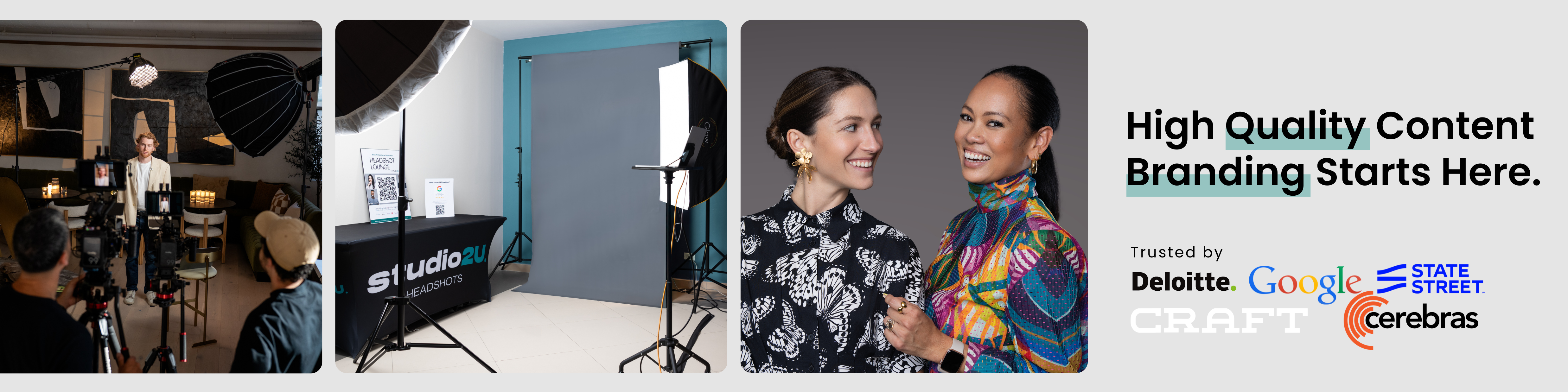
A typical discovery call covers your building’s visual standards, tenant volume, and any existing brand guidelines, followed by a test shoot to confirm the space and lighting before the full program launches. For a single office or small tenant group, the START UP package runs $2,500 per shoot. Buildings coordinating across multiple tenants or floors typically fall under the STANDARD or ENTERPRISE branding tiers, starting from $2,000 and $3,500 per shoot respectively, with a $1,000 branding add-on available for teams that want expanded coverage. If your building runs tenant amenity days or networking events alongside headshot sessions, the conference and networking packages start at $2,500. Book a discovery call to map your building’s brief and get a test shoot on the calendar.
Building classification standards come from BOMA International’s official framework, the industry benchmark for what separates Class A properties from Class B and C. For a market-level view of how these classifications affect production decisions, PropertyShark’s breakdown of office building classes is worth a read. On the vendor side, enterprise headshot program standards and on-site headshot service structures both illustrate what a well-run procurement process looks like in practice. Building teams managing vendor relationships more broadly may also find agency and vendor solution directories useful for benchmarking onboarding requirements.
Corporate headshot pricing depends on volume, location, and whether the shoot is single-office or multi-site. studio2U’s START UP package for single-office or small-team programs is $2,500 per shoot, while multi-office branding programs start from $2,000 to $3,500 depending on scope, listed on the branding page.
AI image generators can produce a stylized portrait from an uploaded photo, but they don’t replace a real photography session for corporate use. Class A buildings need consistent lighting, real backgrounds, and brand-accurate color across dozens or hundreds of tenants, which an AI-generated image can’t standardize across a group.
Avoid pure white, busy patterns, and very bright or neon colors, since they tend to distort exposure and pull focus from the face. Solid, mid-tone colors like navy, charcoal, or muted jewel tones photograph cleanly against most backdrops. A corporate headshot attire guide is worth sharing with tenants before photo day.
The 20-20-20 rule is a lighting ratio concept sometimes used to balance key, fill, and background light so no single source overpowers the frame. Definitions vary across photography disciplines, so building teams should ask their vendor directly how they apply lighting ratios to headshot sessions rather than assuming a universal standard.
Standardizing at least the crop, color grade, and retouching philosophy across the building keeps directories and shared portals looking cohesive, even if individual tenants request different backgrounds. A written gold-standard spec, enforced through the procurement contract, is the most reliable way to keep that consistency intact across renewals and new-hire refreshes.
