Keep Glasses in Headshots: Studio Tested 5° Tilt and Off Axis Lighting
%20(1)%201.png)
.png)
.png)
August 24, 2026
%20(1).jpg)

Produce a 45 to 90 second testimonial video built around a measurable outcome, matched to your prospect’s industry, plus a 15 to 30 second cut for social and paid ads. That combination is what actually moves a B2B buying committee from “interested” to “signed.” Shorter cuts get watched to completion far more often than long-form pieces, and testimonial videos convert best at the decision stage when they lead with a number rather than a compliment.
Here’s why this works and what to do this week:
Outcome-first testimonial videos, kept short and matched to industry, convert better than long-form or generic customer praise because they reduce a buying committee’s perceived risk faster than any other content format.
| Point | Details |
|---|---|
| Lead with the outcome | Open the video with the measurable result, not a company introduction. |
| Cut for length and channel | Produce a 45 to 90 second hero video plus a 15 to 30 second social and ad cut. |
| Verify every number | Confirm metrics and get logo permission in writing before publishing. |
| Distribute natively | Post on LinkedIn directly, embed in sales rooms, and personalize in outreach. |
| Get compliance sign-off | Have sensitive figures reviewed by the customer’s legal team before release. |
| Consider a production partner | studio2U handles on-site shoots across multiple locations with fast turnaround when scale or speed matters. |
A buying committee doesn’t believe your homepage. It believes a customer who looks and sounds like them describing a problem they recognize. That’s the entire mechanism behind why B2B client testimonials outperform almost every other asset at the bottom of the funnel: they transfer risk from “should we trust this vendor’s claims” to “did this work for someone like us.”
The performance data backs this up. Shorter testimonial cuts, in the 45 to 75 second range, see meaningfully higher completion rates than longer edits, and a 15 to 30 second soundbite built from the same footage tends to hold attention better in ad and retargeting placements. On distribution, LinkedIn shows up repeatedly as the most effective channel B2B marketers report for video, which matters because that’s where your buyers are already scrolling during work hours.
Placement matters as much as production quality. The right moments to deploy a testimonial are:
Before you book a single interview, decide what cuts you actually need. Most teams walk away from one shoot with a hero video, a social clip, an ad soundbite, and a raw quote for slide decks. Plan for all four upfront so you’re not re-editing later.
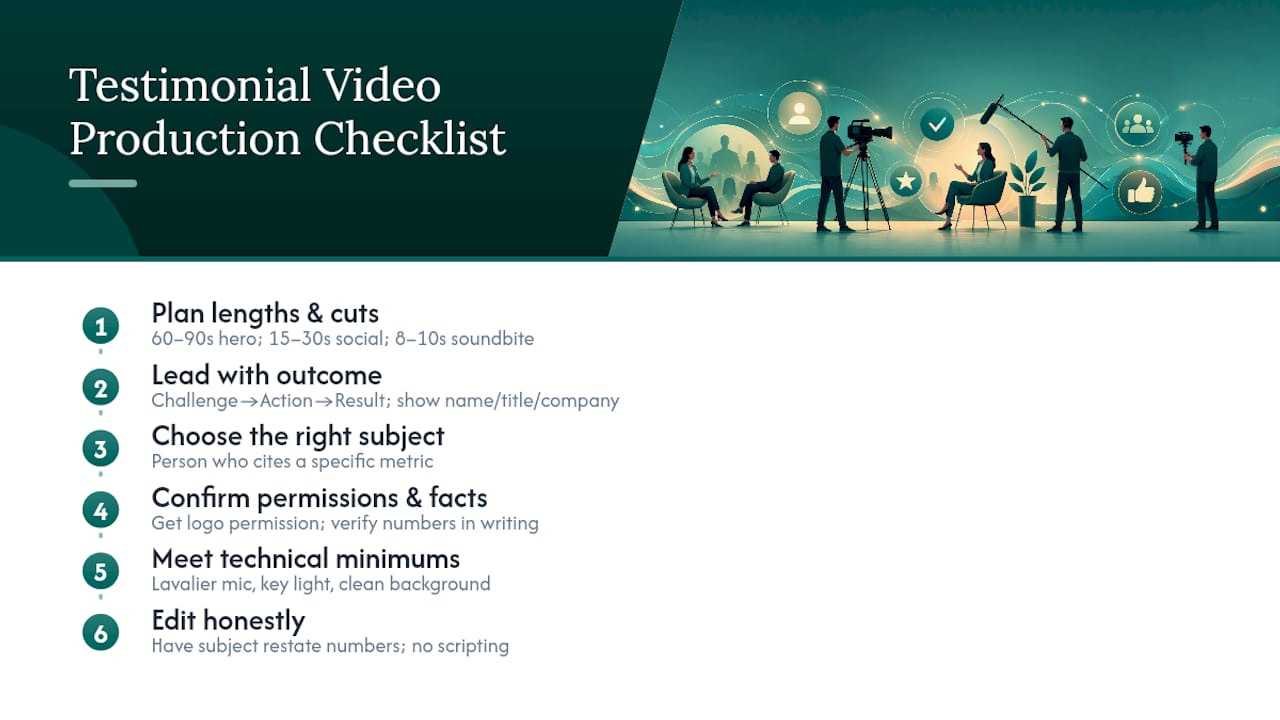
1. Length and cut plan. Build a 60 to 90 second hero video for your website and sales room, a 15 to 30 second cut for LinkedIn and paid retargeting, and one 8 to 10 second soundbite that isolates the single best line for ads.
2. Structure the story around outcome first. Open with the result, not the introduction. A Challenge, Action, Result framing (what was broken, what they did, what changed) keeps the story moving instead of meandering through backstory. Keep the customer’s name, title, and company visible on screen the entire time, since anonymized quotes read as far less credible.
3. Choose the right person, not just the right company. A director of operations describing a specific metric beats a CEO offering generalities. Confirm job title accuracy, get logo usage permission in writing, and verify any number they cite (revenue saved, hours reduced, error rate dropped) before it goes in the final cut.
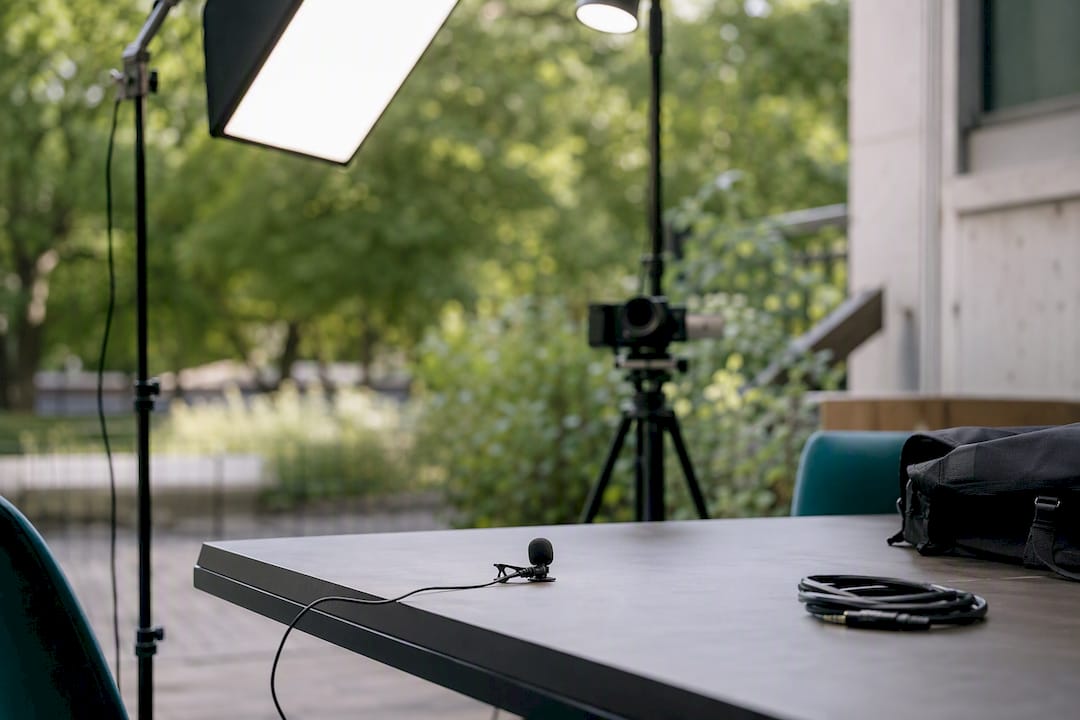
4. Hit minimum technical specs. Clean audio matters more than resolution. A lavalier mic, soft key light, and a clutter-free background will outperform a 4K shot with room echo every time. Small upgrades, a second light for fill, a shallow depth of field, a branded backdrop, multiply how premium the final piece feels without multiplying your budget.
Wardrobe and framing questions come up constantly; our corporate headshot attire guidance applies just as well to video subjects.
Pro Tip: Ask your subject to restate any hard number twice, once early and once at the end. You’ll almost always use the second take, since people relax into specificity after the first attempt.
One more thing: never dress up a testimonial to the point it stops being true. If a customer didn’t say it, don’t script it into their mouth. Authenticity is the entire value proposition here, and a single fabricated line can undo the trust the whole format is built on.
Rather than praise specific vendors, look at the patterns that repeat across effective testimonial videos and steal the structure.
Annotated example roundups consistently show the same failure pattern worth avoiding: overly scripted praise with no metric attached. A customer saying “they’re great to work with” without a number is filler. Cut it.
The strongest testimonial clips share one trait: a stranger could repeat the customer’s key sentence back to you an hour later. If the line isn’t memorable, it isn’t finished.
Match the example type to your buyer. A finance-sector prospect responds to the executive endorsement style; a fast-moving startup buyer responds better to the scrappy remote-interview format that feels less produced.
1. Select and prep your customer. Choose someone with a verifiable, specific result, not just an enthusiastic one. Send a short consent form covering usage rights, logo permission, and how long you can use the footage. Share three to five interview questions in advance so they can think through numbers, but don’t let them fully script answers.
2. Set the interview structure. Start with two minutes of unrecorded small talk to settle nerves. Ask open questions: “What was happening before you found us?” then “Walk me through what changed.” Push gently for numbers: “You mentioned faster turnaround, can you put a figure on that?” Natural voice beats polished delivery every time a viewer can tell the difference.
3. Choose your capture format. An on-site shoot with a portable studio setup gives you full lighting and audio control and minimizes disruption to the customer’s workday, since the minimal-disruption approach tends to produce more authentic, natural-sounding answers than a heavily staged set. Remote interviews work when travel isn’t feasible; a minimal kit (external mic, ring light, tripod) closes most of the quality gap.
4. Prioritize the edit. Cut for the outcome first, trim every hedge word and false start, and build your required versions (hero, social, soundbite) from one editing pass rather than re-cutting from scratch each time. Add captions by default, since most social viewing happens muted, and drop in the customer’s logo and title as a lower-third for credibility.
5. Organize your assets. Name files by customer, industry, and cut length so sales reps can find the right version fast (example: “AcmeCorp_Fintech_Hero_75s.mp4”). Tag clips by use case in your asset library so a rep working a healthcare deal isn’t stuck sending a manufacturing example.
Your website’s homepage and solution pages deserve the hero cut, placed above the fold or directly beside pricing where hesitation peaks. LinkedIn gets native uploads (not YouTube links dropped into a post), since native video performs better than externally hosted links in that feed. Email sequences benefit from the short cut embedded directly rather than linked out, and sales reps should have direct access to drop clips into shared sales rooms during active deals.
Personalization multiplies impact. A rep sending a fintech prospect the fintech customer’s testimonial, timed right after a demo when objections are fresh, will outperform a generic “check out our reviews” link every time.
Get more mileage from one shoot:
Event footage repurposes especially well this way; see how an event highlight video gets sliced into multiple formats from one shoot.
Track completion rate and average watch time first. If viewers drop off before the 20 second mark, your hook is weak, not your customer’s story. Beyond that, measure demo conversion lift on pages with a testimonial embedded versus without, and CTA click-through on emails that include a video link.
Run two A/B tests before assuming anything: a landing page with the testimonial versus one without, and a persona-matched testimonial versus a generic one sent to the same segment. Tag every video link with UTMs and check embed analytics on your hosting platform, then ask closed-won customers directly which piece of content they remember seeing. That last step catches influence your dashboard misses entirely.
| Metric | What it tells you |
|---|---|
| Completion rate | Whether the hook and length are working |
| Watch time | Where viewers drop off in the story |
| Demo conversion lift | Whether the video moves prospects to book |
| CTA click-through | Whether the video drives the next action |
Our approach at studio2U treats every testimonial shoot as a sales asset from the first planning call, not a branding exercise that happens to get repurposed later. We bring a portable studio directly to the customer’s office, which keeps the interview relaxed and cuts turnaround time since nobody has to travel.
A simple rubric for deciding whether to produce this in-house or bring in a partner:
Pro Tip: Estimate ROI before you shoot: if one testimonial video shortens your average sales cycle by even a week across a handful of deals, it usually pays for itself in that first quarter.
Confidentiality issues surface more often than most marketing teams expect, especially with customers in finance, healthcare, or any regulated industry. Before you film anything, confirm with the customer’s legal or compliance team whether specific numbers, client names they mention, or internal process details are safe to publish.
Get explicit written permission for every metric that appears on screen. A customer might casually mention a cost-savings figure during the interview that their finance department never approved for public release. Build a review step into your workflow where the customer (and, if applicable, their legal team) sees the final cut before it goes live, not just a transcript.
Some categories need extra care: revenue figures, customer counts, unreleased product names, and anything tied to a competitor. When in doubt, ask the customer to speak in relative terms (“we cut costs significantly”) instead of an exact figure, or blur specific screen content during editing.
Keep a signed release on file for every video, covering usage rights, duration of use, and revocation terms. This protects both parties if the customer relationship changes or if the customer later asks you to take the video down. A five-minute conversation about what’s shareable, held before the camera turns on, prevents an awkward retraction request three months after launch.
Most guidance on testimonial videos treats them as a checkbox: get a happy customer, point a camera, post it somewhere. That advice produces forgettable content because it skips the hardest part, which is treating the video as a sales asset with a specific job to do in a specific deal stage.
The conventional wisdom also overrates polish. A slightly rough remote interview with a real, specific number beats a beautifully lit testimonial full of vague enthusiasm. Buyers can tell the difference between a customer who was coached and one who’s just describing what happened.
If you take one thing from this, prioritize the interview questions over the production budget. A great question, “can you put a number on that,” pulled at the right moment turns a forgettable quote into your best sales asset for the next two years. Production quality matters, but it’s the second decision, not the first.
— Kevin
Most marketing teams either try to DIY a testimonial with a smartphone and a conference room, or they hire a traditional production company that hands over raw files weeks later with no strategy attached. studio2U works differently: we bring a portable studio to your customer’s office, run the interview with outcome-first questions built in, and deliver the hero cut, social clip, and ad soundbite from one shoot, typically within days, not weeks.
That speed matters when you’re trying to get a testimonial live while a case study is still fresh or a launch is still generating buzz. If you’re planning your first customer interview or need a partner who can film across multiple offices without sacrificing consistency, visit studio2U to book a shoot and see how quickly we can turn one customer conversation into a full set of sales-ready assets.
Fabricating a testimonial or misrepresenting a customer’s actual experience can violate advertising regulations in many jurisdictions, and it destroys the trust the format depends on. Always use real customers, verified numbers, and get written consent before publishing.
A strong example features a named customer describing a specific challenge, the action they took, and a measurable result, shot either on-site or via remote interview with clean audio and their name and title visible on screen.
Include the customer’s name, title, and company, a clear before-and-after outcome with a real number, and a short, natural narrative that avoids scripted-sounding praise. Keep the whole piece under 90 seconds for the primary cut.
There’s no single best tool. It depends on whether you need remote recording, editing, or hosting with analytics; many teams combine a recording tool, an editing platform, and a hosting player like Wistia to track engagement. A production partner like studio2U handles the full workflow in one engagement if you’d rather not stitch tools together yourself.
