Press Release Photo Specs: Size, Format and Captions


October 15, 2026


SF Tech Week runs October 5–11, 2026, and it is a citywide, decentralized week presented by a16z, made up of separately hosted events. There is no single universal ticket. Each host controls RSVP, approval, capacity, and cost, so you apply to every event individually through the official calendar.
TL;DR:
- Register for each event, and an RSVP may not secure entry until the host approves you; check confirmation emails and keep a backup.
- Use calendar filters by day, neighborhood, host, or event type, then group sessions geographically; crossing town between events can consume your evening.
- Prices and capacity vary by host, and popular sessions may fill or use waitlists; apply early, especially for selected pitch and demo opportunities.
- Remote access depends on individual hosts, with no centralized stream or remote track described; contact organizers directly about recordings, streams, and venue policies.
Think of the week as an ecosystem rather than a conference. The official site describes a decentralized program where every event has its own audience approval, capacity, venue, and registration rules. That gives you breadth, but you have to assemble your own itinerary. Formats you will see most often:
The deep-tech program shows the thematic range: AI, chips, physical AI, security, health, climate, and sustainability. Its events are organized by date and neighborhood, with listings in SOMA, FiDi, Mission Bay, the Mission, the Embarcadero, and Dogpatch.
Geography matters more than most first-timers expect. San Francisco is compact, but crossing it between sessions eats your evening. Pick a neighborhood per day and stack your events there. If your priority is AI founders, cluster around SOMA. If you care about biotech or health, Mission Bay is the natural base.
Treat the official calendar as the operational source of truth. It lists events by time, name, host, and neighborhood, and you can filter by day, host, neighborhood, or event type. Registration is event-specific: an RSVP to one session grants no access to another.
Hosts also decide who gets in. According to Host HQ, hosts screen and approve guests, and the platform supports filtering questions, approval, ticket tiers, and QR check-in. A completed RSVP may not guarantee entry until the host confirms.
Here is the process that works:
Pro Tip: Apply to pitch and demo events first, since they often require selection to present on stage, then fill the gaps with open meetups.
Hosts set their own rules, so reading each listing beats assuming anything about the week as a whole. Our reading of the official materials is that you should not assume the week is universally free or universally ticketed.
A good itinerary has an anchor event each day and flexible slots around it. Use the neighborhood metadata on the deep-tech listing and the calendar to group sessions, then leave a buffer for transit, lines, and check-in. Because hosts control approval and capacity, popular sessions can fill fast or run a waitlist.
Public event pages for SF Tech Week recommend staying near SOMA, where many events concentrate. If you are traveling in, a base in or near SOMA shortens most of your trips, and a transit app plus a ride-hail fallback covers late evenings.
Practical habits that save you:
Pre-trip checklist:
If you want your event on the official calendar, submit it through the host form described on Request for Events 2026. Approved events receive calendar visibility, and select events may be amplified through Tech Week channels. Popular formats include panels, happy hours, hackathons, lunches, and experiential events.
The platform side is specific. The How to Host guide states that Partiful is the official event platform and that you should build your event from the Tech Week Partiful template, keep the required filtering questions, and put the city tag, in our case #SFTechWeek, in your title.
Here is the sequence:
Amplification is possible but not guaranteed. Hosts own operations, capacity, and the door, so your plan needs real answers on venue, staffing, check-in flow, and content capture. Decide before the week starts who will photograph, who will record, and how fast you need clips out. A speaker headshot station is one easy way to give presenters something useful to take home.
The calendar’s range is easiest to grasp through examples. The events calendar on Luma lists named sessions such as hackathons, launch parties, a Production Agent Labs session, and a Sales Copilot AI hackathon. You will also find curated, pitch-style rooms like GGW Sharks, an AI founders and investors event, where presenters apply or are selected to go on stage.
Keywords that surface the best fits:
Founder salons and curated demos, such as the Claude Founder Salon, are speaker-and-demo formats that can sell out quickly, so register as soon as you spot one. Adjacent festivals also cluster around the same dates, for example Step SF 2026, which shows how dense the local events season gets.
The format grew out of a simple idea: San Francisco already hosts the founders, investors, and engineers, so a week of events can coordinate what is already happening instead of building a venue around it. The current program is presented by a16z, and the official materials describe it as an ecosystem coordination layer rather than a centrally programmed conference.
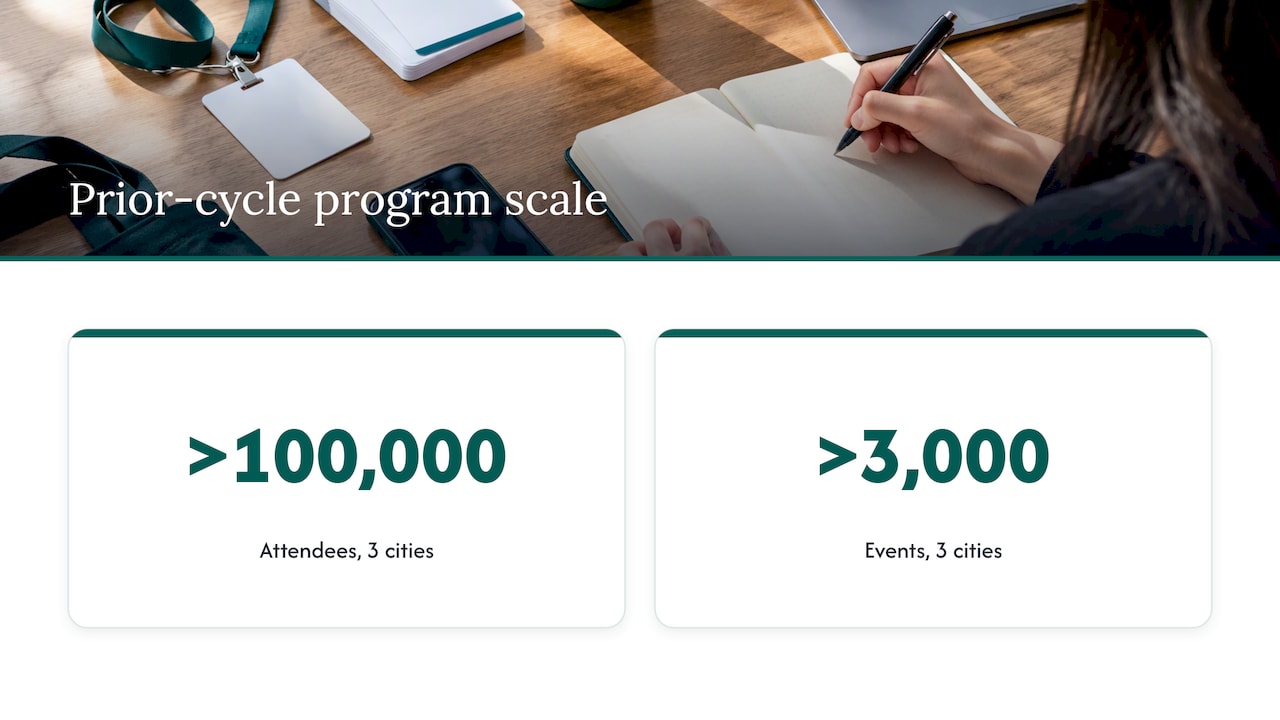
That origin explains the shape you see today. Hosts are companies, investors, communities, and individual organizers who run their own sessions, and the central site gathers them in one calendar. The host request page says more than 100,000 people attended a Tech Week event and more than 3,000 events appeared across New York, San Francisco, and Los Angeles in the prior cycle, and the page presents these as organizer-provided program figures.
We would add one caution about detailed history. The sources we have verified describe how the program works now, not a dated founding timeline, so we avoid inventing one. What we can say with confidence is the model: open hosting, a shared calendar and tag, and per-event access rules. That model is why the week feels less like a trade show and more like a month of meetups compressed into the week. Each year’s edition builds on the same structure, which is part of why returning attendees know to start with the calendar rather than a schedule handed to them.
Because the program is decentralized, there is no single sponsor wall. The week is presented by a16z, and the rest of the lineup comes from the hosts. Those hosts range from early-stage startups and AI labs to investor groups, community organizers, and media brands.
You can see the mix directly on the calendar. Listings include investor-led rooms like GGW Sharks, product-driven gatherings like the Claude Founder Salon, and named sessions such as happy hours tied to TechCrunch Disrupt, as shown on the Luma calendar. Hosts are different from sponsors in the traditional sense, since each one pays for and runs its own event.
For attendees, the practical takeaway is to follow hosts, not logos. A host’s track record tells you more about an event’s quality than the presence of a famous name somewhere on the week’s branding. Open the host’s profile, see what else they run, and check who attended before you commit your evening.
For companies, hosting is the main way to participate. If you want visibility, the route is the host form, not a sponsorship package. You get calendar placement and a chance at selective amplification, then you earn attention through the quality of your own session.
SF Tech Week matters because it concentrates a year’s worth of introductions into seven days. Founders meet investors, engineers meet potential employers, and early users meet the teams building tools they will adopt. The decentralized design lets small communities appear next to large ones, which widens who gets seen.
The official materials frame the value as reach plus ecosystem context. Host HQ says organizers get that reach but not a guaranteed physical audience, which is a fair description of the whole week. The effect is real, though it depends on what each host builds.
For the local economy, the week turns existing venues, restaurants, and coworking spaces into event infrastructure for a few days. For the ecosystem, it makes topics visible. When the deep-tech program groups AI, chips, security, health, and climate under one banner, it signals where builders are putting their attention.
For you, that means the week works best when you arrive with a goal. Hiring, fundraising, customer discovery, and learning are all possible, but each needs a different set of events. Decide which one matters most, then let the calendar filters do the rest.
Networking here rewards preparation over volume. With a wide range of events and open hosting, the people who benefit most pick a few rooms and show up with a clear sentence about what they do and what they want.
Remember the geography rule: staying in one neighborhood per day gives you more time to talk and less time moving. Back-to-back sessions across town cut into the conversations that make the week worth it.
If you host, build networking into the design. Name tags with a topic line, a short icebreaker, or a structured round of introductions beats leaving guests to fend for themselves. For virtual or hybrid add-ons, a lightweight format helps, and this guide to short virtual networking activities has ideas that work without downloads.
SF Tech Week is built around in-person events, and the official materials we reviewed do not describe a centralized remote track or a week-wide health protocol. Safety and attendance rules sit with each host, just like access and capacity.
That means the right move is to read each listing. Hosts may set check-in requirements, venue policies, or capacity limits, and the Host HQ guide notes that hosts control approval, check-in, and refunds. If an event matters to you and you have health concerns, contact the host directly and ask about venue policies and whether a recording or stream is planned.
Remote participation is up to individual organizers. Some may stream a panel or share recordings afterward, and some will not. If you cannot travel, follow hosts whose content you want, check their event pages for stream links, and watch their channels after the week for clips.
If you host and want to reach people who cannot attend, plan it early. A recorded keynote, a short social cut, and a few published photos extend your reach well beyond the room. That is cheap to arrange before the week and hard to reconstruct afterward.
Most hosts plan the room and forget the record. The week is a rare moment when speakers, founders, and customers are all in one place, and a single well-planned shoot can feed months of marketing. The hosts who benefit most decide before October what they will capture and how fast they need it out.
— Kevin
Our team brings on-site production to events like these, so your session becomes a library of assets rather than a memory. Our Conferences service covers what a Tech Week host typically needs:
You get quick turnaround, consistent visual branding across sessions, and content built for sponsor reports, recruiting, and future ticket sales. Looking at a wider rollout across your company? See our Branding services.
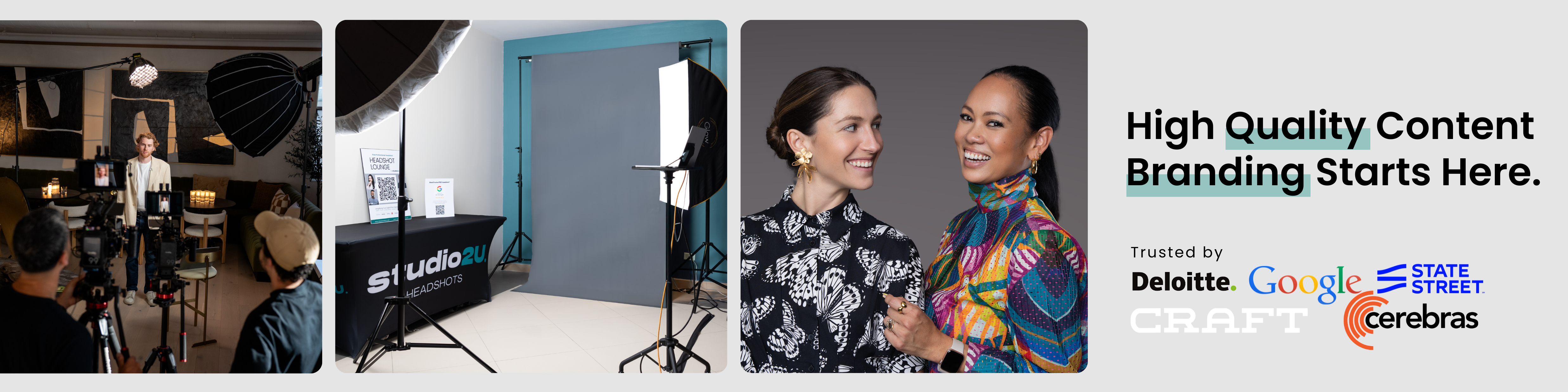
Ready to plan your capture? Review the Conferences page and request a planning conversation at Studio2uheadshots.
SF Tech Week is a citywide, decentralized week of host-run events presented by a16z. Hackathons, panels, workshops, demos, and meetups run across San Francisco, and each has its own RSVP and access rules, as the official site explains.
It runs October 5–11, 2026. Check the official calendar for each event’s exact day, time, and neighborhood.
There is no universal ticket price. According to Host HQ, each host sets costs, capacity, and approval rules, so some events are free and others are ticketed.
Register for each event separately through its listing. Hosts may approve guests individually, so an RSVP can still need confirmation before you are admitted.
Submit your proposal through the official host form, then build the event from the Tech Week Partiful template and add the city tag to your title. The steps are laid out on Host HQ.
