3 Shots That Make Company Group Photos Work by Team Size and Tone
%20(1)%201.png)
.png)
.png)
September 11, 2026
%20(1).jpg)

Require three things before any photographer or video vendor sets foot on-site: a current Certificate of Insurance showing general liability at typical coverage limits per industry standards, an additional insured endorsement with primary and non-contributory wording, and proof of workers’ compensation or commercial auto if the vendor brings crew or vehicles. A COI is a summary, not the policy, so pull the actual endorsement pages before you sign off. Bigger productions or drone work push those minimums higher.
TL;DR:
- Vendors should provide a current Certificate of Insurance showing coverage limits of at least $1 million per occurrence and an endorsement that includes your organization as an additional insured with primary, non-contributory wording.
- For larger crews, high-value equipment, or drone use, higher minimum coverage levels and specific endorsements are required, such as workers’ compensation and drone liability policies.
- Always verify endorsement pages in addition to the COI to confirm coverage scope, policy dates, insurer legitimacy, and the presence of primary and non-contributory language before vendor engagement.
- Insurance requirements must be tailored to project size, crew composition, and equipment value, with strict contract language specifying policies, limits, dates, and endorsement details to prevent disputes.
- Continually re-verify COIs for ongoing projects or multi-location shoots, and centralize documentation to streamline vendor management and ensure compliance before each event.
Before any contract goes final, build your intake checklist around six items. This is the baseline procurement and event teams should copy into vendor forms, regardless of whether the shoot is a single headshot day or a three-day conference activation.
Treat this list as a floor, not a ceiling. A solo photographer shooting headshots in a conference room carries different exposure than a five-person crew running lighting rigs and a drone over an outdoor company event.
Reading the Certificate of Insurance is step one, not the whole job. A COI is a one-page summary a broker generates; it confirms that coverage exists, but it doesn’t prove the scope of protection, according to LegalClarity’s breakdown of photographer COIs. Always request the endorsement pages themselves before treating a vendor as fully compliant.
Work through these steps every time:
Watch for red flags: a COI that names only a certificate holder with no endorsement attached, expired dates, an insurer that won’t confirm the policy over the phone or vague language about coverage scope. Escalate any of these to legal or the vendor’s broker before signing.
Pro Tip: Ask the vendor’s broker directly for the endorsement form number and edition date. Additional insured endorsements have narrowed over the years, and two vendors carrying policies with the same name can have very different actual protection.
A single photographer working alone in your office carries low risk. Add a second shooter, a lighting assistant, a van full of gear, or a drone, and the exposure changes fast enough that your insurance requirements should change with it.
Match the coverage tier to the actual production, not to a one-size-fits-all template pulled from a previous contract.
Vague insurance clauses cause disputes months after the shoot, usually right when someone files a claim. Specificity in the contract prevents that. State the exact policies required, the minimum limits for each, and the date range they must cover, rather than a generic line about “adequate insurance.”
Pro Tip: Build a standard insurance rider you attach to every vendor contract instead of rewriting the clause each time. Consistency here saves your legal team hours and closes the loopholes that show up when every contract uses slightly different wording.
Insurance verification isn’t a one-time checkbox. Policies lapse, renew, and sometimes get canceled mid-contract, so build a repeatable process rather than relying on memory.
Corporate procurement teams have sent us the same requests for years: current COI, additional insured with primary and non-contributory wording, sometimes a waiver of subrogation for a particular venue. The vendor treats that as a standard part of booking, not a special request. Our teams coordinate with our broker ahead of shoots so the paperwork is ready before a client’s legal or facilities team even asks.
That matters most for multi-location engagements, where the same corporate client might need identical coverage confirmed across five office locations in a single quarter. Portable studio setups and standardized production processes help make that repeatable. A nationwide corporate photography operation that runs the same insurance paperwork the same way every time removes a recurring headache from your vendor management process, rather than adding one.
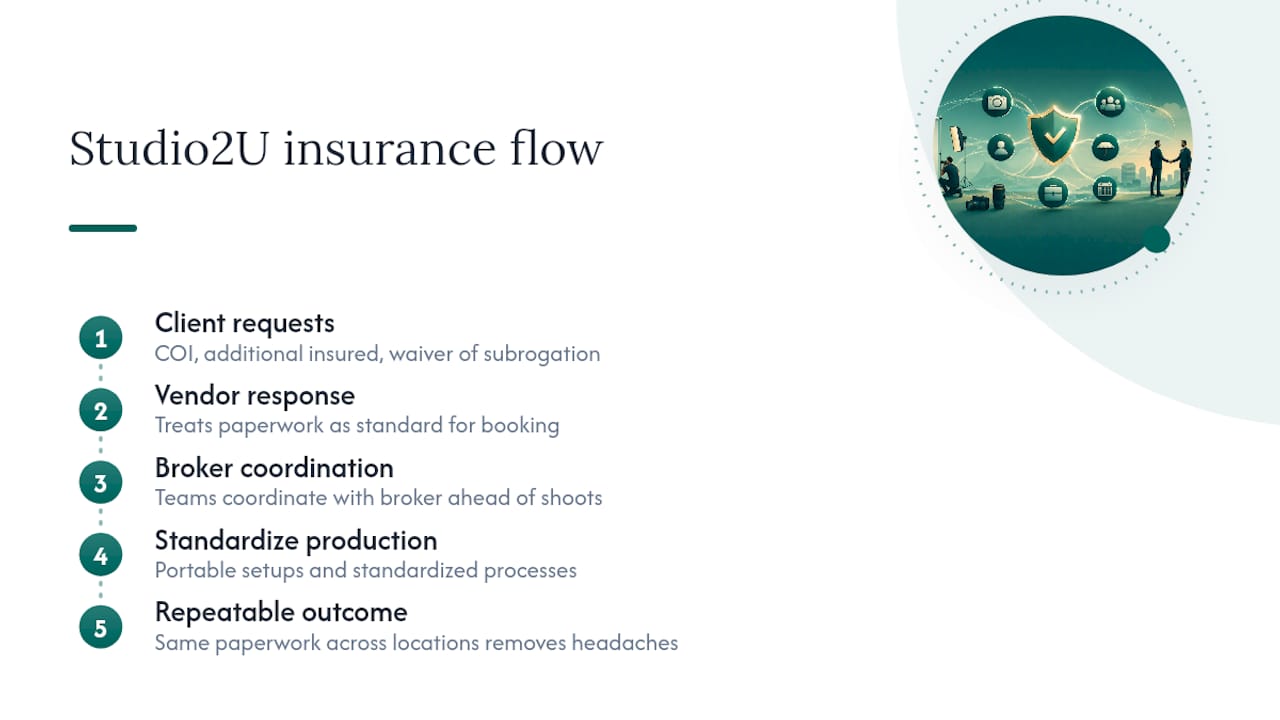
Chasing down COIs and endorsement pages from a vendor mid-contract is the kind of friction that stalls a launch or delays a hiring campaign. The vendor supplies current Certificates of Insurance and the standard endorsements corporate clients often request as a normal part of booking, not as a follow-up scramble after a procurement team flags a gap.
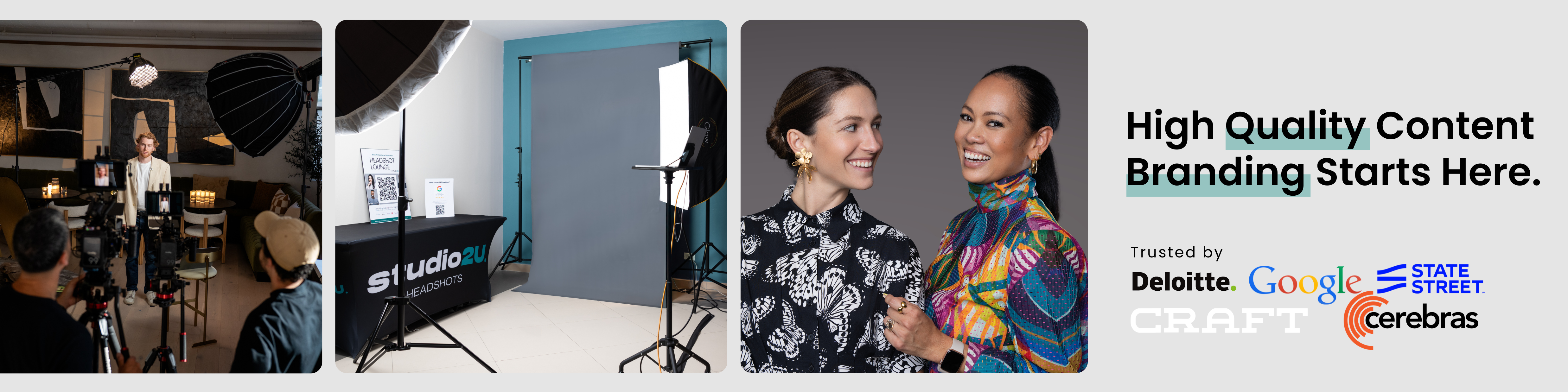
The vendor’s teams travel with portable studios to client offices, conferences, and multi-location engagements, running a consistent production and paperwork process at every stop. That consistency is what makes corporate headshot and branding photography easier to schedule across departments without re-explaining your insurance requirements every time. If your team needs a vendor whose paperwork is ready before you ask for it, get in touch with studio2U to book a compliance-ready shoot.
A COI is a one-page summary from an insurer or broker confirming coverage types, limits, and policy dates. It is not the policy itself, so request the endorsement pages too before assuming full protection.
$1,000,000 per occurrence and $2,000,000 aggregate is a common baseline, with venues hosting larger crews or higher-risk activities often pushing this to between $2 million and $5 million depending on scale.
It means the vendor’s insurance pays first in a claim, before your organization’s own policy is touched. Without this wording specified in the endorsement, your insurer could end up billed first.
Yes. Policies can lapse or change between bookings, so request a fresh COI naming your specific event dates within roughly two weeks of the shoot, not just at initial contract signing.
Require it once the vendor brings employees or subcontractors on-site, along with commercial or hired and non-owned auto coverage if their crew drives between locations during the production.
