Office Tour Video: Plan, Shoot and Use It Well


November 18, 2026


Office branding photography is a planned set of images and video shot in your own workplace: your people, your space and your work, built to be used across the website, sales decks, recruiting pages, press and investor materials. The companies that get the most from it decide what each image is for before the camera comes out, and they bring the studio to the office so the whole team can be photographed in one visit. That is how we run it at Studio2U: portable studios on location, a strategic discovery call first, and a shoot designed around a business goal.
This guide is for marketing managers, HR leads, founders, event organizers and investors who need a team’s worth of images, not a single portrait. It covers what to plan, how to audit what you already have, and how to handle the moments that most often trigger a shoot: a funding round, an acquisition, a conference.
The phrase gets used loosely, so it helps to split it into three layers.
Team portraits. Consistent headshots of everyone who appears on your site, in proposals, on LinkedIn and in investor materials. Consistency matters more than any single flattering frame: a page of mismatched backgrounds and crops reads as an unfinished company.
Workplace and lifestyle images. People working, meeting and collaborating in the real space. These show culture and pace in a way a stock photo cannot. Our guide to office lifestyle photography goes deeper on what to capture.
Video. Founder messages, customer stories, hiring clips and announcement videos, filmed during the same visit so the look matches the stills.
Buyers searching for corporate office photography are usually after the first two layers. The third is where the return grows, because one visit can feed a year of content.
A shot list tells the photographer what to point at. A brief tells everyone why. Write the brief first, and keep it to one page. A good brief names:
This list follows the structure of a brand photography brief described by a design studio in its 2026 guide, and it holds up because each item removes a question that would otherwise come up mid-shoot. For a more practical walk-through of defining attributes, audiences and boundaries, these visual storytelling tips are a handy complement.
Then turn the brief into a shot list. Ours is laid out in the brand photography shot list, and the rules for keeping a whole team’s images in line are in our brand photography guidelines.
The most common regret after an office shoot is running out of usable images in six weeks. The fix is range, planned in advance:
An open-plan floor shot against a clean wall gets a very different result than the same people against a window. Planning three or four setups in a few hours of on-site time is what makes the output last.
Before you commission anything, find out what you already have and where it fails. This is a visual brand audit, and it takes a few hours rather than weeks.
One creative audit method recommends collecting 60 to 90 days of published assets from every touchpoint, then scoring each on color fidelity, typeface consistency, photography style and verbal tone on a 1 to 3 scale. Assets that score 1 on three or more dimensions show where the system breaks. For photography, translate that into practical questions:
The same source describes a mid-size consumer brand whose audit turned up 14 different logo versions and six color palettes across its ad and social channels. Photography drifts in the same way when teams shoot piecemeal. Different people, different years, different photographers.
Video needs its own pass. List every video you have, then sort each into one of four buckets:
| Bucket | What it means | Typical action |
|---|---|---|
| Keep | On brand, accurate, still relevant | Leave as is |
| Refresh | Good content, outdated people, logo or look | Re-cut, re-caption or add new footage |
| Retire | Wrong message, wrong look, or no longer true | Take down |
| Gap | Audience or channel with no video at all | Add to the shoot brief |
The gap column is the point of the exercise. It becomes the video part of your brief: a founder message, customer story or hiring clip you do not yet have.
Office branding photography is easiest to justify when a specific event gives the images an immediate job.
A closed round brings press, new hires, partner outreach and investor updates, often within weeks. The images that help most are a refreshed team page, founder and leadership portraits, a few workplace shots showing the team at work, and a short announcement video. For the video, decide who speaks, what the single message is and where it will live (your site, LinkedIn, the press release) before filming. Keep it short, with the founder speaking plainly about what the money lets you build for customers.

If you also want customer proof, film the case study during the same visit or schedule it with the same look, so the announcement and the story feel like one company.
Two teams with two visual identities look like two companies until someone fixes it. Private equity firms and portfolio leaders benefit from photographing both teams to one standard, same lighting, same background, same crop, so the combined leadership page looks planned. Our guide to post-merger photography covers sequencing across offices. Because we bring portable studios to each location, a multi-office rollout can match across cities rather than depending on whichever local photographer is free.
Financial firms have their own conventions on tone and attire, which we cover in financial services headshots.
A good case study video is built on a real customer talking about a real outcome. Plan three things: the result in one sentence (a number if the customer will share it), the person who can say it best, and the setting that shows their work. Film them at their own office when possible. It adds credibility that a studio backdrop does not.
For an investment firm, a founder series works as top-of-funnel marketing for deal flow. Keep a repeatable format: the same set, same framing, same opening question, so each episode looks like part of a series and can be shot back to back. Film several founders in one visit rather than one at a time. The consistency makes the series look like a brand asset, not a collection of clips.
Event organizers have a different need: attendees want portraits and sponsors want content, both fast. Live photo viewing on site means people can see and share images before they leave, and the content keeps working for sponsors after the event. We run conference and networking packages built around this.
Workplace branding works best when it starts from the people who work there. When CannonDesign built a brand and culture playbook for Verizon’s 55,000-square-foot Miami office, it used collaborative workshops and ethnographic interviews to develop a guiding idea and three tenets, piloted the approach in Miami, then carried it to offices worldwide. The lesson for photography is the same: the images you commission should express a point of view your own people recognize, and the process of defining it keeps global consistency while allowing local character.
You do not need a workshop series to do this at smaller scale. A 30-minute conversation with leadership and a few employees about what the company is like to work at will surface the three attributes your brief needs.

You can judge office photography on two questions: is it consistent, and is it useful?
Consistency checks
Usefulness checks
Keep the comparison simple: the same pages, the same channels, a before and after window of equal length. You are looking for direction, not proof to the decimal.
Our pricing is published per shoot, and the package depends on team size and use. As listed on our site:
| Package | Price | Best for |
|---|---|---|
| START UP | $2,500 per shoot | Growing teams needing in-office headshots |
| STANDARD | From $2,000 per shoot | Branding photography for a company team |
| ENTERPRISE | From $3,500 per shoot | Larger or multi-location needs |
| BRANDING ADD-ON | $1,000 per shoot | Adding branding images to a shoot |
| NETWORKING | $2,500 per shoot | Smaller networking events |
| SUMMIT | $4,500 per shoot | Mid-size summits |
| CONFERENCE | $8,000 per shoot | Full conferences |
The five-day turnaround and retouching apply to the content we deliver, and events include live photo viewing.
We see the same pattern again and again: companies spend on product, hiring and fundraising, then represent themselves with a patchwork of old headshots and stock images. That gap costs trust before a sales call even starts.
Our view is that office branding photography should be treated as a system, not a favor to the marketing team. Start with a discovery call about what the images must do. Shoot the whole team, the space and the stories in one visit, on location, with a portable studio that barely disrupts the workday. Then use the same library across the website, decks, recruiting, investor updates and press for the year ahead.
Real people, real work and real customer outcomes will always beat staged photography. That is the standard we build every project around.
Kevin
We bring portable studios and production teams to your office, your portfolio companies or your event, anywhere in the United States, starting with a discovery call about what the content needs to achieve. Team headshots, branding photography and video can be planned into one visit, with retouching and a five-day turnaround. See our in-office headshot package, the branding packages or the full list of services to choose the fit for your team.
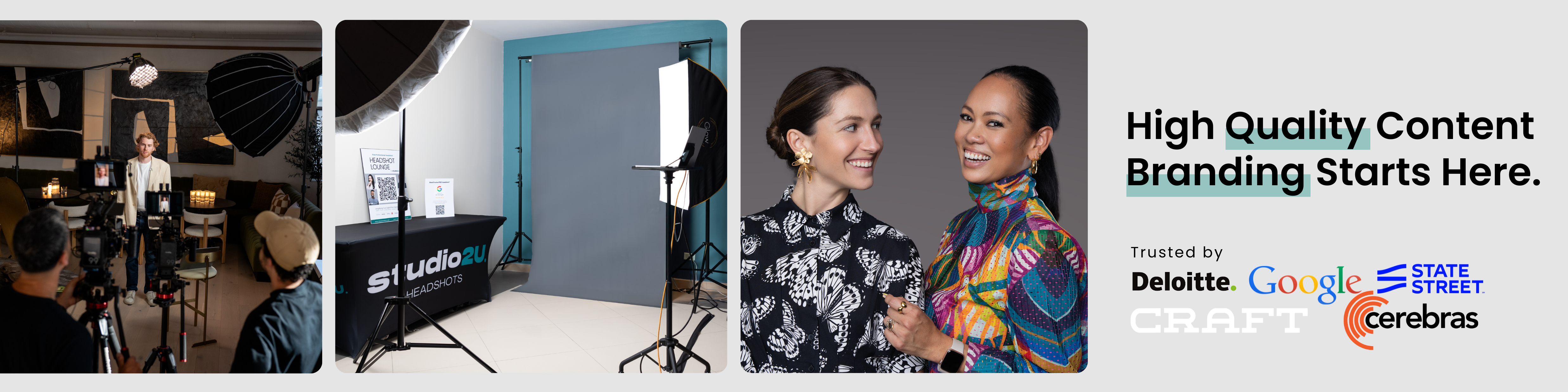
Headshots are portraits of individuals on a consistent background. Office branding photography adds the space, the work and the interactions, so your images show what the company is like and not only who is on it. Most teams book both together so the look matches. Our corporate headshot guidelines cover the portrait side.
That depends on team size and how many setups you want. A small team can be photographed in a few hours, while larger or multi-location rollouts are planned across days or sites. We scope this on the discovery call, and you receive retouched images within five days of the shoot.
Refresh when something material changes: new leadership, a round of hiring, a move, a rebrand, an acquisition. Many companies also add new hires on a regular cycle so the team page never falls out of step. The audit in this guide will show you when the gap has become visible.
Write the one-page brief, tidy the locations you want to use, tell staff the time slots and wardrobe suggestions, and decide which screens and documents must stay out of frame. Having a point person on the day keeps the schedule moving.
