5 Zone Event B-Roll Checklist: Editor-Ready for Conferences
%20(1)%201.png)
.png)
.png)
September 4, 2026
%20(1).jpg)

A branded conference headshot booth is one of the highest-perceived-value activations you can add to an event floor. It pulls foot traffic without a raffle or giveaway table, produces instant shareable content, and gives sponsors a direct lead-capture mechanism tied to a qualifying question. A company can run this exact activation nationwide, delivering branded galleries and retouched headshots on-site.
TL;DR:
- The headshot booth can generate high-value social media exposure, with up to 200 LinkedIn posts per day that promote both the event and sponsors.
- Registration should include a qualifying question tied directly to the sponsor’s offering to produce actionable leads and segment potential clients effectively.
- Throughput varies from 30 to over 100 headshots per hour, with larger events benefiting from multiple stations to avoid long lines and attendee frustration.
- Sponsor revenue comes from branding, custom backdrops, and lead data, with fees often ranging into five figures depending on exclusivity and scale.
- Rapid photo delivery within minutes of capture maximizes social sharing and brand engagement during the event, boosting overall ROI for organizers and sponsors.
Attendees remember a professional headshot longer than a tote bag or a stress ball. A polished LinkedIn photo solves a problem people actually have, which is why organizers report booths outperforming typical swag in both foot traffic and dwell time. That perceived value translates into something sponsors care about far more than brand impressions: a reason for someone to stop, register, and hand over contact information.
The social layer compounds the effect. When attendees post a new headshot to LinkedIn tagged with the event or sponsor name, that single photo becomes earned media the organizer never paid for directly. A booth that produces 200 headshots in a day can generate 200 potential LinkedIn posts, each one carrying the event’s branding to an audience the conference never had to buy.
That combination makes the booth sellable as its own line item rather than a cost buried in the event budget.
The right setup depends entirely on who is standing in line and what they need from the photo. A hackathon founder wants something pitch-ready by Sunday night. A conference attendee wants a nice perk that doesn’t cost them a session slot. A sponsor wants qualified leads. Here’s how the three models differ.
Most large conferences end up running some blend of the second and third models: a perk that feels free to attendees while carrying sponsor branding and lead capture in the background. Hackathons tend to stay closer to the first model since speed matters more than sponsor monetization at that stage.
The mechanics are simple, but the sequencing determines whether the line moves or backs up into the aisle. Most activations run on one of two registration models, and picking the wrong one for your event size is the most common setup mistake.
Pre-scheduled slots work best for conferences with 500+ attendees and an app-based agenda, since they smooth demand across the day and prevent a mid-afternoon crowd. Walk-up flow works better for hackathons and smaller expos, where spontaneity matters more than precision scheduling and lines under 15 minutes are tolerable.

Registration itself usually happens through a QR code on signage, a badge scan at check-in, or a short branded form on a tablet. The form should ask for name, email, company, and one qualifying question tied to the sponsor’s product or service, since that single field is what turns a headshot line into a lead list.
The on-site sequence generally looks like this:
Throughput varies by mode. Vendors typically cite 30 to 100 or more headshots per hour per station, with premium “lounge” experiences running closer to 20 to 30 an hour and high-volume setups pushing well past that. A single station usually covers a lounge-style perk; a busy expo floor with a four-hour peak window often needs two parallel stations to avoid a bottleneck.
Pro Tip: If your event has a known peak window, like right after a keynote, staff a second station just for that window and scale back afterward. It costs less than running two full stations all day and solves the exact problem that creates a bad attendee experience: a 40-minute line.
A headshot booth only pays for itself as a sponsor asset if the branding and the lead flow are designed before the event, not patched on afterward. Sponsors are effectively buying two things: visible brand presence and a list of people who opted into a conversation.
On the branding side, a full sponsor package typically includes a custom-branded photo backdrop, overlay graphics on every delivered image, a co-branded delivery email template, and signage directing attendees to the booth. AI-assisted booths can generate stylized branded images in about 30 seconds, which adds a novelty layer some sponsors use to differentiate their activation from a plain photo backdrop next door.
Pricing for the sponsor slot itself varies by conference size and exclusivity. Some organizers charge a flat fee per event day; others structure it as a per-attendee rate or a tiered bundle that includes booth branding plus a certain number of guaranteed leads. Sponsor fees for premium, branded headshot activations commonly reach into low five-figure ranges depending on scale and how exclusive the placement is.
The qualifying question does the real lead-scoring work. Instead of a generic “are you interested in learning more,” ask something the sponsor’s sales team can actually act on, such as “Are you currently evaluating a [category] solution?” or “What’s your team size?” That single data point lets the sponsor sort leads into hot and cold buckets before the first follow-up email goes out.
Full-day headshot activations commonly run $2,500 to $7,500 or more, depending on the number of days, travel distance, staffing, and whether the sponsor wants a custom backdrop or extra retouching. Multi-day conferences or multi-city tours move toward the higher end of that range, mostly driven by travel and additional photographer days rather than the shoot itself.
Staffing follows throughput. A single station with one photographer and one producer covers most lounge-style perks comfortably. Once expected volume climbs past what one photographer can shoot without a backup, budget for a second station and a second staff pair rather than pushing one team past a sustainable pace.
Add-ons that move the price up:
On timing, vendors generally recommend booking three to six months ahead of peak conference season, though last-minute bookings sometimes work depending on travel logistics and photographer availability.
The activation’s value doesn’t end when the last attendee gets their photo. What happens in the following two weeks determines whether a sponsor renews for next year.
Data handoff should happen fast, ideally within 24 to 48 hours, in a format that drops straight into the sponsor’s CRM: a spreadsheet or direct integration with name, email, company, and the qualifying-question answer attached to each record. That answer is what lets a sales team route leads by interest level instead of treating every name the same.
A simple nurture sequence works well here: send the delivered headshot with a short thank-you note, then follow up two or three days later with a message tied to the qualifying answer, for instance directing “yes, evaluating” leads straight to a demo booking link.
Sponsors want a report that shows the work paid off:
Space needs are modest: roughly a 10 by 10 foot footprint, one power outlet, and clear sightlines so signage can pull attendees off the main aisle. Confirm all of this with the venue before the event, not the morning of.
Pro Tip: Bring backup batteries, a second laptop with the same software loaded, and a simple queue-management sign (a physical line marker works fine). The activations that go sideways almost always fail on one of those three things, not on photography quality.
Some companies bring portable studio equipment and production teams directly to conference floors, which means the setup, lighting, and branding stay consistent whether the event is in one city or rotating across several. This event work often focuses on startups, accelerator programs, and conference organizers who need fast turnaround without sacrificing image quality.
Deliverables can include branded galleries, retouched images, and a workflow designed to fuel content well past the event itself, feeding sponsor recaps, LinkedIn photo libraries, and future marketing rather than producing a one-off folder of files nobody opens again.
The single biggest lever for renewal is the delivery speed, not the photo quality. Get the image into someone’s hands within minutes and they post it that day, while the event is still trending. Wait until the next morning and half that social value evaporates. On staffing, resist the urge to run one station at max speed during the whole event. A slower, better-coached line produces photos people actually use.
— Kevin
Studio2U is the direct alternative to piecing together a local freelance photographer for a one-off show: one nationwide team, one consistent branded workflow, and a five-day turnaround on final retouched assets no matter which city the event lands in. Instead of hunting for a new vendor every time your conference moves to a new market, you get the same lighting setup, the same corporate headshot standards, and the same branded gallery experience every time.
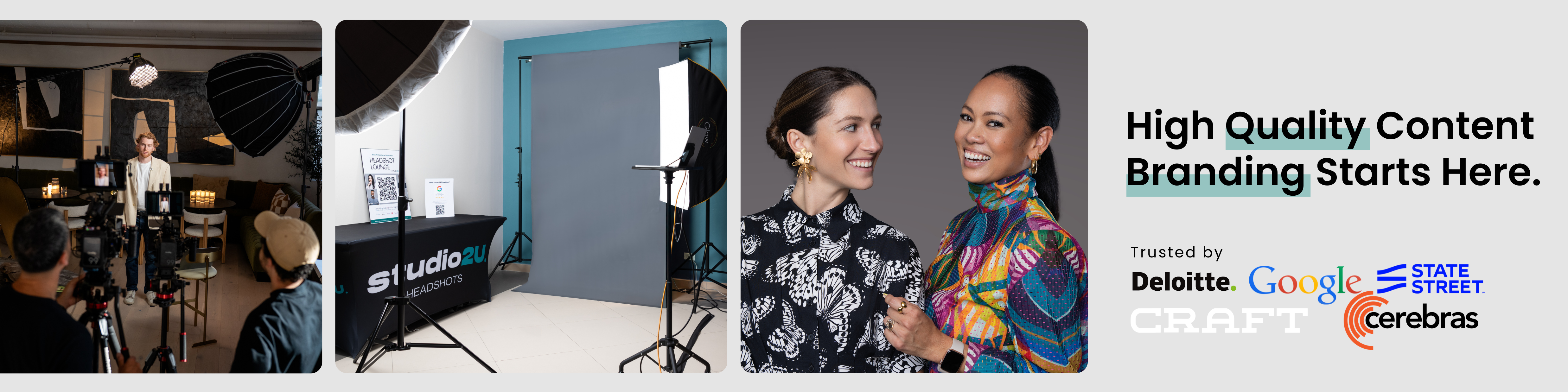
Studio2U’s teams have worked events for startups, accelerators, and enterprise conferences, and the portable studio setup means minimal disruption to your floor plan or your attendees’ schedules. If you’re planning a conference, expo, or hackathon and want a headshot activation that sponsors will actually pay to attach their name to, request a quote or check date availability directly through Studio2U’s booking page.
For guidance on structuring consent and data retention around AI-assisted photo tools, the practitioner guide on AI in event planning covers privacy configuration in more depth. For booking a nationwide activation, visit Studio2U’s landing page directly.
A conference headshot booth is a staffed, branded photography station set up at an event to give attendees a free or sponsored professional headshot, usually delivered within minutes by SMS, email, or a digital gallery.
Full-day activations commonly run $2,500 to $7,500 or more, depending on staffing, travel, number of days, and add-ons like custom backdrops or extended retouching.
Throughput typically falls between 30 and 100 or more headshots per hour per station, with premium lounge-style setups running slower and high-volume configurations running faster.
Registration through a QR code, badge scan, or branded form captures name, email, and company, plus one qualifying question tied to the sponsor’s product, which helps segment leads by intent before follow-up begins.
Yes. Branded backdrops, overlay graphics, and co-branded delivery emails let organizers package the booth as its own sponsorship tier, with fees that commonly reach low five-figure ranges for premium, exclusive placements.
