One-Day On-site Headshots: Templates & Proofs for Corporate Organizers
%20(1)%201.png)
.png)
.png)
August 22, 2026
%20(1).jpg)

The photo mix that makes an annual report credible is fixed: executive headshots, team and culture shots, operational imagery, milestone and CSR coverage, and event highlights. The most efficient way to capture all five in one pass is booking an on-site headshot studio during your company’s annual meeting or sales kickoff, when distributed teams are already in one room.
That timing matters more than most communications teams realize. Waiting to schedule separate shoots across five or six offices costs weeks and produces mismatched lighting, backdrops, and framing that readers notice even if they can’t name why.
Book the photographer and reserve dedicated studio space on your event floor plan now, before the agenda locks.
The strongest annual reports pair custom, on-site photography, headshots, culture shots, operations, milestones, and event coverage, with a single coordinated shoot timed to an annual gathering.
| Point | Details |
|---|---|
| Cover five photo types | Include executive headshots, team culture, operations, milestones/CSR, and event coverage in every report. |
| Time it to your gathering | Schedule photography during your SKO or annual meeting while distributed teams are already together. |
| Book 8 to 10 weeks out | Lock the photographer and floor space early so shot lists and logistics are set before event week. |
| Specify deliverables in writing | Confirm file formats, retouching scope, and usage rights before signing any contract. |
| Use studio2U for one-event coverage | studio2U’s portable on-site studios capture headshots, department photos, and event highlights in a single day with five-day delivery. |
Each photo type in an annual report does a different job, and placing the wrong one in the wrong section undercuts the page’s credibility rather than supporting it.
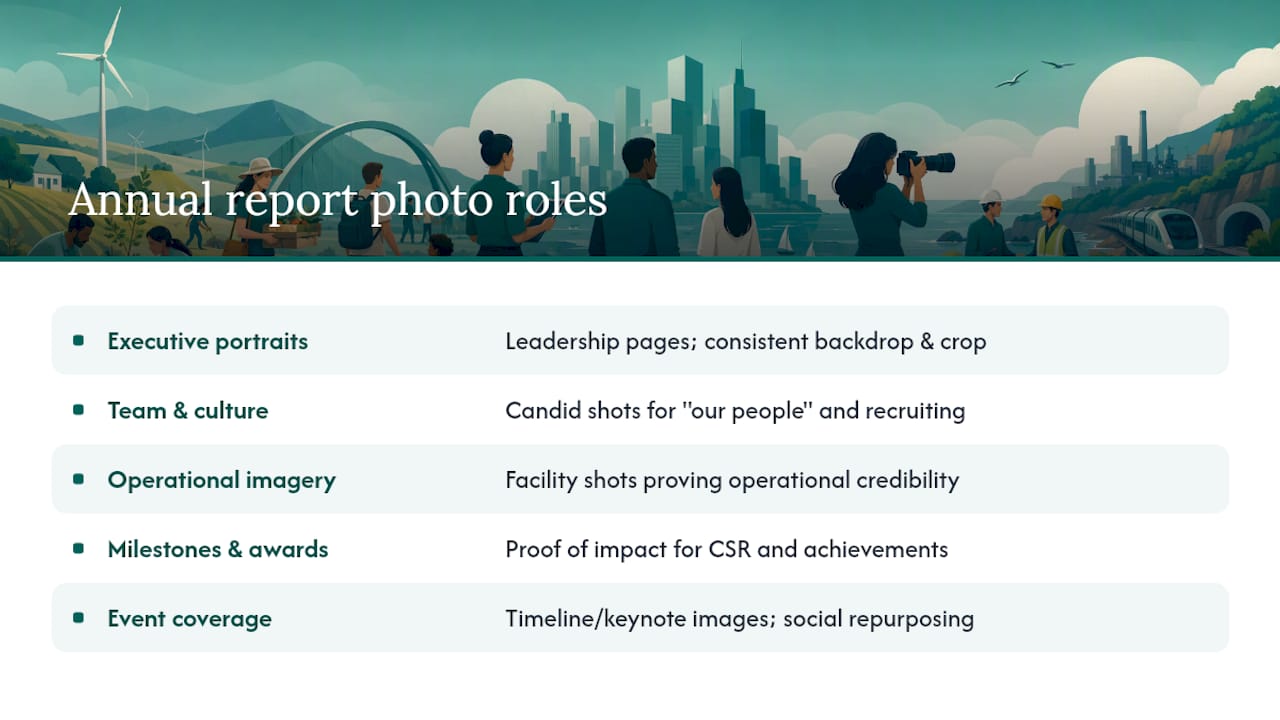
Executive portraits set the tone for the whole document. They belong on the leadership message page, the board bio section, and often the inside cover, where readers form their first impression of who is running the company. Consistency matters here more than anywhere else: same backdrop, same lighting ratio, same crop, across every executive, regardless of which office they normally sit in. A report where the CEO’s headshot looks studio-lit and the CFO’s looks like a webcam grab reads as disorganized, even if the numbers behind it are strong.
Team and culture photos, by contrast, work best candid. These go on recruiting-adjacent pages and “our people” spreads, and they’re the images most likely to get pulled for LinkedIn later. Operational and facility imagery, meanwhile, does quiet credibility work on pages about manufacturing capacity, data centers, or service infrastructure, proving the company is real and running, not just a set of financial statements.

Milestones, awards, and CSR photography give investors and employees visual proof of impact claims that would otherwise sit as unverified text. Event and keynote coverage from your annual meeting fills timeline graphics, supports the CEO’s forward-looking message, and gets repurposed on social media for months.
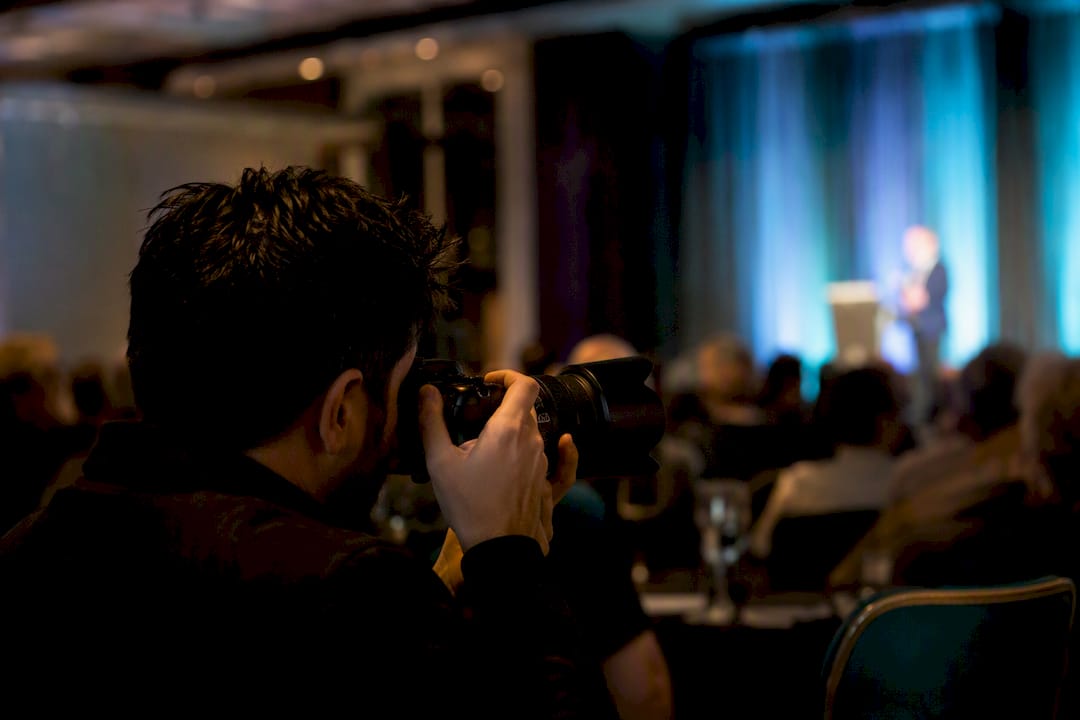
Pro Tip: Shoot headshots and candid culture photos on the same day but never in the same setup. Mixing posed and unposed styles in one backdrop area slows the queue and confuses the visual hierarchy in post-production.
Lock in your photographer 8 to 10 weeks before the event date. That lead time lets the studio confirm floor plans with your event planner, build a shot list against your attendee roster, and ship equipment if the venue is remote.
For a 150-person SKO, a two-lighting-setup studio with a two-station queue typically clears headshots for the full group in a single day. For gatherings over 400 people, plan two full days or add a second studio bay.
Pro Tip: Coordinate with HR on session breaks, not just the agenda. People skip headshots when they think they’ll miss the next speaker, so build the slot into the printed schedule, not just a hallway sign.
Pricing for corporate photography at an annual gathering usually runs on one of three models: per-person rates for headshots, a day rate that covers unlimited headshots plus event coverage, or a bundled package scaled to team size. Day rates are the most common structure for SKOs and annual meetings because they cover both structured headshots and roaming event photography without a per-click meter running.
What moves the price beyond the base rate: retouching depth (basic color correction versus full skin and lighting retouch), the number of final deliverables per person, and whether the license covers unlimited internal and external use or is capped by channel.
Academic research on S&P 1500 annual reports found that image use rises specifically when a firm’s disclosures are dense or complex, and that reports leaning on more photography saw improved analyst forecast accuracy. That’s a real budget argument for finance teams asking why photography spend belongs in the annual report line item at all.
A tight brief saves you from a reshoot. Give the photographer your goals (investor confidence, recruiting support, brand consistency), your primary audiences (shareholders, candidates, press), visual references from prior reports or competitor reports you admire, a deliverables list, and explicit language on usage rights.
Five questions worth asking before you sign anything:
Before signing, confirm the contract specifies file delivery format, whether rights are perpetual or time-limited, and a firm turnaround SLA in writing, not a verbal estimate. Vague contract language here is the single most common source of post-event disputes over reuse rights.
Print and web have different technical demands, and a photographer who only delivers one resolution set is going to cost you a second shoot or a scramble before the print deadline.
| File Purpose | Recommended Format |
|---|---|
| Print layout (annual report PDF) | 300 DPI TIFF or high-res JPEG, CMYK |
| Website and digital PR | 72 to 150 DPI JPEG or WebP, RGB |
| Social media (LinkedIn, PR kits) | Square and portrait crops, RGB |
| Internal archive | Full-resolution originals with embedded metadata |
For press and partner-facing images specifically, check PR headshot requirements before finalizing your spec sheet, since press kits often demand a different crop and file naming convention than your internal design team uses.
One annual gathering, run right, produces a year of usable imagery. studio2U’s standard approach at SKOs and leadership summits pairs a portable two-light studio with a pre-event survey of attendee headcount, department breakdown, and priority executives, so the shot list is built before anyone walks in the door.
A single SKO with 200 attendees, run through a portable studio setup, regularly produces a full year’s leadership headshots, department photos, and event highlight galleries, ready for the annual report, LinkedIn, the careers page, and the next PR pitch, all from one day of shooting.
Companies typically pull these assets across employer brand campaigns, sales decks, and investor materials well past the report’s publication date.
The three mistakes I see most: no backdrop consistency across sessions, no batch retouch standard agreed up front, and no buffer time between keynote blocks and headshot slots. The fixes are just as simple: lock one backdrop and lighting setup for the whole day, agree on retouch rules before the first click, and pad your schedule by 20 minutes per block. Book the studio before you finalize the agenda.
If you’re weighing a patchwork of local photographers across five cities against one coordinated shoot, the math almost always favors the single event. studio2U runs portable studios directly at your SKO, leadership summit, or annual meeting, capturing consistent, brand-aligned headshots for executives, sales teams, and every department in one sitting, with a five-day turnaround so files are ready before the momentum from the event fades.
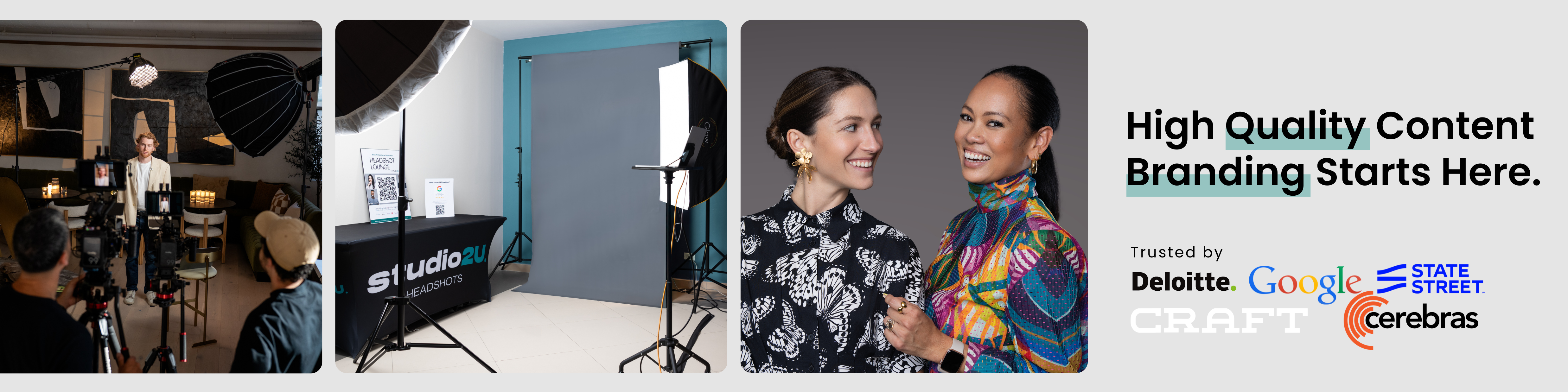
Enterprise packages scale by headcount and cover headshots, event photography, and recap content in a single booking, no per-office coordination required. To get a scoped quote, share your event date, expected headcount, and the deliverables you need (print files, web files, social crops) through the studio2U site, and ask about the sample shot list template for planning your floor space and schedule.
Strong annual reports typically pair full-width, custom photography with concise copy and data visuals rather than dense text blocks; Shorthand’s roundup highlights several that use this approach to stay engaging and reusable across marketing channels.
This framing isn’t a standard annual report photography rule, and definitions of it vary by source; it’s more commonly referenced in general portrait lighting or composition discussions than in corporate report guidelines.
Beyond financial statements, a strong annual report includes a leadership message, operational highlights, and photography covering executives, teams, facilities, and milestones; Investopedia’s guide breaks down where narrative and visuals typically intersect with disclosures.
Public companies file annual reports and 10-Ks through the SEC’s EDGAR database, which is the standard place to find official, published examples across industries.
Yes. Get signed releases from every employee, executive, and any external partner photographed, since a report distributed publicly and to investors counts as commercial and PR use, not internal-only use.
