Conference Speaker Headshots: Hybrid Workflow, 1 to 2 Hour Turnaround
%20(1)%201.png)
.png)
.png)
October 3, 2026
%20(1).jpg)

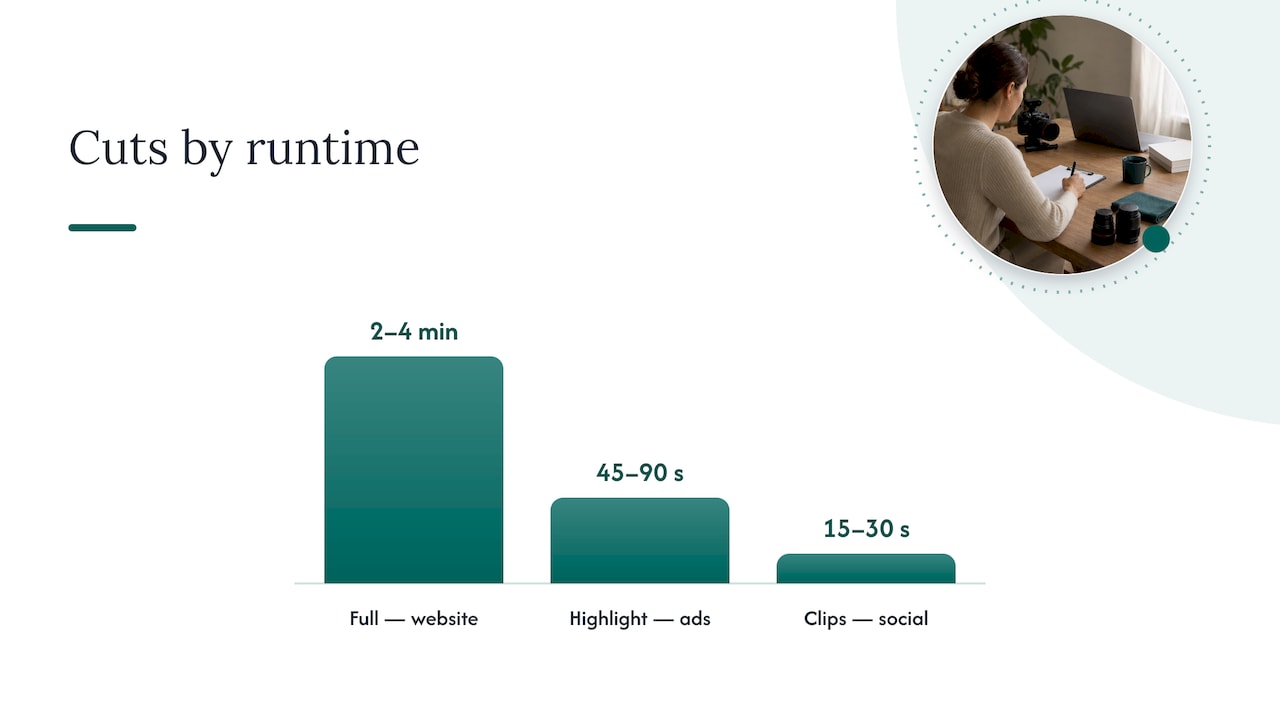
Use the Challenge, Solution, Impact structure, and plan for three cuts from a single shoot: a 2 to 4 minute narrative, a 45 to 90 second highlight, and 15 to 30 second social clips. Build the video around one clear, attributable metric, whether that is revenue, lead rate, or time saved, and display it on screen rather than leaving it buried in dialogue.
TL;DR:
- Focus on clear, measurable metrics early in the video, prioritizing on-screen data paired with customer explanation to maximize impact.
- Map all stakeholders, research key numbers, and prepare specific interview questions to streamline production within a single day.
- Produce multiple assets from one shoot, including full-length case studies, short highlights, and social clips, optimized for various distribution channels.
- Use formal release agreements signed before filming, especially when mentioning sensitive numbers or minors, to avoid legal issues.
- Opt for professional production for high-value deals or paid campaigns, while in-house filming may suffice for quick sales support with modest reach.
A video case study is a persuasive narrative built from a real customer’s experience, showing a problem, the fix, and a measurable outcome on camera. It is not a testimonial reel and not a product demo. A testimonial is a quote. A demo shows features. A case study proves the features caused a result, with a real person attached to the proof.
For B2B teams, this format shortens the distance between interest and decision. Buyers rarely act alone, and a well-made case study gives every stakeholder in a deal the same evidence at the same time, which speeds up internal consensus. Wistia’s work with Ansarada shows how anchoring a video in a specific buyer persona helps different roles in a purchase committee see themselves in the story, which accelerates agreement.
Use this format when you need to:
Choose a straight product demo when the sale hinges on functionality, and a short testimonial when you only need a quick trust signal, not a full narrative.
The three-act structure works because it mirrors how people actually evaluate decisions: what was wrong, what changed, and what it was worth.
Map each cut to a different budget of time and attention. The full 2 to 4 minute story is for your website and sales decks, where someone is already leaning in. The 45 to 90 second highlight is for landing pages and paid ads, where attention is shorter and the single strongest proof point needs to land fast. The 15 to 30 second clips are built for social feeds, where you have maybe three seconds to earn a second look.
Balanced production practice, drawn from branded video work reviewed by the American Marketing Association, suggests pairing purpose-driven storytelling with visible performance data rather than leaning on one alone. A story without a number is forgettable. A number without a story is forgettable too.
Show the KPI early enough to earn attention, but save the full context for the impact section so the emotional arc still has somewhere to go. A lower third stating the metric at the open, followed by the full explanation at the close, does both jobs without spoiling the ending.
Most B2B video case studies can be shot in a single day if the groundwork happens before the crew arrives. Here is a sequence that keeps a one-day shoot on schedule from discovery to delivery.
Pro Tip: Send the customer your core questions 48 hours ahead so they can think through specific numbers instead of giving a vague answer on camera.
A single day of filming should produce assets for months of use, not one video that lives on a single page.
Wistia’s work with BluLeadz shows how pulling multiple assets from one shoot, rather than treating each placement as a separate production, is what makes the economics of video case studies work. Add burned-in captions for every social cut, write metadata and titles around the customer’s industry and use case, and track watch-through rate on long-form assets alongside click-through and assisted pipeline on short ones. Tag each asset in your analytics platform by cut type and channel so you can tell which length actually moves a deal forward.
Two templates cover most B2B needs.
Studio2U builds corporate video and photography around the same principle this format depends on: real people, real outcomes, minimal staging. The company’s on-location model brings a portable studio and crew directly to a client’s office or event, which keeps the shoot close to the natural environment that makes a case study believable in the first place.
This article is written by Kevin for Studio2U’s editorial content.
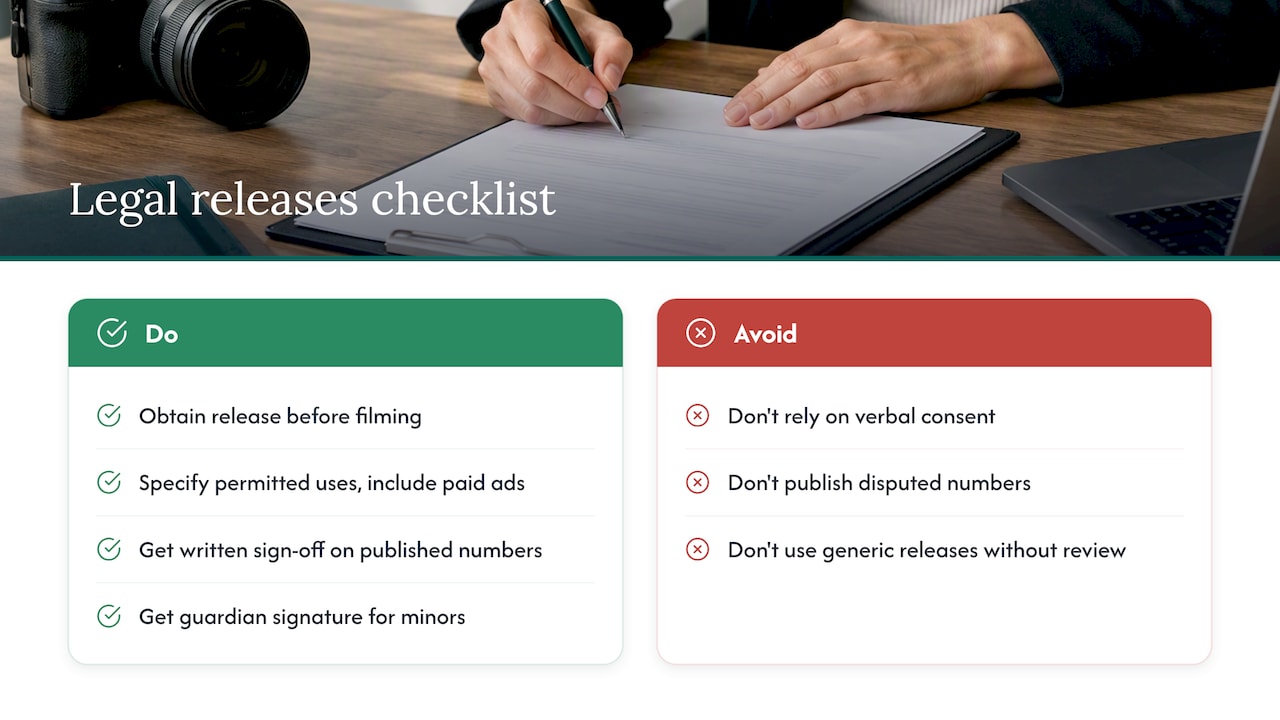
Every person who appears on camera, speaks on a recording, or whose name is used in the final cut needs to sign a release form before the video is published, not after. A release should state exactly how the footage will be used, including which platforms and whether it will appear in paid advertising, since many standard releases exclude paid use by default.
Get the release signed before the shoot day if possible, or at the latest before anyone sits in front of a camera. Verbal agreement is not a substitute, and a customer who later changes jobs or has a falling out with your company can create real problems if the paperwork was never finalized.
If the case study names specific revenue figures, cost savings, or performance numbers, have the customer confirm in writing that they are comfortable with those numbers being public, since a number that gets walked back after publication can damage trust more than not having a number at all. Production guidance drawn from customer-story work suggests asking for outcomes the client is genuinely comfortable standing behind rather than pushing for a bigger number they might later dispute.
For any minor appearing on camera, such as a child in a company event video, a parent or guardian signature is required, and for employees, many companies also require a standard employee consent form on file separate from the customer release. When in doubt about a specific legal requirement in your jurisdiction, a media or employment attorney should review the release language rather than relying on a generic template found online.
A video case study only works if people can find it. On YouTube, the title should state the customer’s industry and the outcome, not just the company name, since most viewers search by problem rather than by brand. A full transcript in the video description helps search engines index the spoken content, and closed captions improve both accessibility and watch time, since many viewers watch with sound off.
Thumbnails matter more than most teams expect. A thumbnail showing the customer’s face with a short text overlay of the key metric tends to outperform a generic title card. Chapter markers in longer cuts let viewers jump to the impact section directly, which helps anyone scanning for proof rather than watching start to finish.
On LinkedIn, native upload generally outperforms a shared YouTube link, since the platform favors video that stays on-platform. Captions are not optional there either, and the first three seconds need to carry the hook since autoplay is silent and feeds move fast. Tag the company mentioned in the case study where appropriate, and post the highlight cut rather than the full narrative, since LinkedIn’s feed rewards shorter watch-through over long-form content.
Across both platforms, consistent metadata, naming conventions, and descriptions that mention the customer’s industry and use case help the content surface in search long after the original post has scrolled out of a feed.
In-house works when the deal size is modest and the footage only needs to support a quick sales conversation. Hire a production partner when the case study will run in paid ads, appear on your homepage, or support a deal large enough that a shaky shot or bad audio could undercut the story. My rule: if the expected reach or deal value is high enough that credibility is the whole point, prioritize production quality over speed.
— Kevin
Studio2U’s packages map directly onto the shoot this format calls for. The START UP package, listed at the headshots page, fits a smaller team producing their first multi-cut case study. For companies needing a fuller branding and video production day, the STANDARD, ENTERPRISE, and BRANDING ADD-ON packages on the branding page cover larger teams, multiple locations, or additional assets layered onto the same shoot day. If the story is being captured at an event, the NETWORKING, SUMMIT, and CONFERENCE packages on the conferences page are built for that setting specifically.
Every project starts with a discovery call covering the story, the KPI you want on screen, and shoot-day logistics, followed by a one-day shoot and fast editing turnaround so the multi-cut assets are ready while the result still feels current. For teams planning how a case study fits into a broader marketing calendar, Authority Engine’s work on buyer journeys is a useful read on aligning video content to executive priorities. Book a discovery call to scope your next case study shoot.
A video case study is a short film built around a real customer’s experience, showing the problem they faced, the solution they adopted, and a measurable result. It differs from a testimonial by proving an outcome rather than just offering praise.
The most common and reliable structure is Challenge, Solution, Impact, told across a 2 to 4 minute full version with shorter cuts pulled from the same footage. This structure works because it mirrors how a buyer actually evaluates a decision, moving from problem to proof.
Definitions vary, but a common version includes the customer’s background, the challenge they faced, the solution implemented, the measurable results, and a closing quote or takeaway. Not every case study needs all five in equal weight, but the challenge, solution, and results sections are the ones that carry the most persuasive weight.
A tool like ChatGPT can help draft interview questions, organize notes into a script outline, or tighten narration language, but it cannot generate the real customer quotes, footage, or verified metrics that make a video case study credible. The substance still has to come from an actual interview and real data.
