Product Launch Media Kit: What to Include and How to Build It


November 24, 2026


A product launch media kit is one shared, public place that holds everything a reporter needs to cover your announcement without emailing you: the release, a fact sheet, bios, logos, and photo and video. Most teams get the text right and stall on the visuals. Current headshots, product imagery and a short video are the slowest pieces to produce, and an uncaptioned or outdated image is exactly the kind of loose end that can delay coverage. Plan the shoot first, write the rest around it, and the kit is ready when the news is.
Terminology varies. PR Newswire describes a press kit as a concise collection for journalists that supports one announcement, and a media kit as a broader brand overview for advertisers, partners and consumers. A launch kit sits on the press-kit side: it exists to support a specific story. The same source notes that press kits are updated often, while broader media kits are refreshed periodically.
Two neighbors are easy to confuse with it:
Ohio State’s strategic communication textbook lists a product launch, a merger and a rebranding campaign among the events that need more than a single release. If you just closed a round, completed an acquisition or are rolling out a new product line, you are in that group.
The published guides agree on a core list. Here it is, with what each piece must do and where launches usually go wrong.
Put the news in the first two lines. Mediatronics PR’s checklist makes that point, and it matches how reporters triage a crowded inbox. Include who, what, when, where and why in the opening paragraph, and a quote from your founder or an early customer.
This is the source of truth. Shopify’s guide recommends gathering the data points people ask for most so journalists do not have to wait on confirmations. For a launch, cover:
Consistency matters more than it seems. Proper Propaganda points out that journalists, retailers and AI platforms may all draw from the same materials, so one wrong spec gets repeated everywhere.
Write a short backgrounder covering your mission, origin and market position, plus a two-to-four-sentence boilerplate that can be pasted straight into a story. Cision recommends jargon-free language throughout, which is the right test: if a general-assignment reporter cannot paraphrase it, rewrite it.
Include a short bio and a longer one for each spokesperson who is central to the announcement. Pair each with a recent, high-resolution headshot and clear usage permissions. Earned’s startup guide suggests bios of roughly 50 and 150 words. For a post-funding or post-acquisition launch, this is where visual consistency shows: a founder photographed last year in a coffee shop next to a new CFO shot in a studio reads as a company still assembling itself.

This is the part that decides whether the story looks finished. Cision notes that journalists cite multimedia as a top component of an ideal pitch and most use PR-provided multimedia to supplement coverage. Elliot & Co. adds that newsrooms increasingly skip stories they cannot illustrate. Plan for:
Offer two or three quotes that are already signed off: one from a founder or executive and one from an early customer or partner. Reporters on deadline will use what is ready, and pre-approval removes a legal review loop at the worst moment.
List a person with a direct email, phone number and time zone, not a generic inbox. Prezly lists a generic info@ address among the most common kit mistakes, alongside forms or logins that block access.
Most launch schedules fail because the visuals are scheduled last. Work backward from the announcement date.
One location, clearly labeled folders, no friction. Proper Propaganda suggests separate folders for press materials, photography, video, executive information, specs and research, with descriptive, consistent filenames and no expiring links.
A few practical rules:
Since the kit is also a public page, its search visibility matters. This overview of press release SEO covers what helps announcements get found and how to measure it.
The kit is usually the first public proof that the round changes how you operate. Add the funding announcement to the fact sheet and boilerplate, then refresh leadership photography so the people named in the release look like the company the release describes. A founder announcement video is a natural launch asset here, and it can be reused on your site, in investor updates and in recruiting.
Private equity teams and their portfolio companies often have two or more sets of logos, bios and photo styles to reconcile. Treat the kit as the place where the combined brand becomes visible: one boilerplate, one photo style across every leader, one set of logo files. Shooting multiple offices in a consistent style is a job we do with portable studios, so the merged leadership group looks like one team.
If the launch happens at a summit or conference, shoot it live and add the best images to the kit afterward. Our event coverage includes live photo viewing, so attendees and your team can see images as they come in.
An outdated kit does damage. Instant Press warns that a journalist who publishes a two-year-old statistic will not trust your materials again, and recommends a 30-minute quarterly review plus updates within a week of major milestones such as funding or launches.
Use Prezly’s update triggers as a working list:
| Event | Update |
|---|---|
| Leadership change | Bios, headshots, contact |
| Rebrand | Logos, guidelines, photos |
| Product launch | Product pages, photos, news |
| Funding or milestone | Fact sheet, boilerplate, timeline |
| New coverage or award | Coverage list, awards |
Two habits keep this manageable. Name one owner for the kit, and keep a simple change log. LaunchWeek.ai suggests recording the date, the change and who made it. Refresh headshots that are more than two years old, since a stale photo is the quickest tell that the rest is stale too.
We are a corporate photo and video branding agency, and the launch kit’s visuals are what we build. Our own press kit photo guidance and PR headshot notes go deeper on formats and framing, and our live photo selection process explains how your team approves images on the day.
Perspective
A media kit is read by a stranger on deadline. In the first thirty seconds that person decides whether your company looks established, and the text rarely makes that call. The faces, the consistency and the quality of the footage do.
That is why we treat a launch as a visual branding project with a business goal, not a photo session. Every project starts with a discovery call, because a founder announcement video, a post-merger leadership set and a conference gallery each need different content and a different finish.
Our approach is to bring a portable studio to your office or event, keep disruption small, and return edited, retouched images quickly, with a five-day turnaround. Authentic, real people beat staged stock imagery, and assets built this way keep working long after launch day: on your website, in sales decks, in investor updates and in recruiting.
Kevin
Our published pricing is per shoot. For team headshots at a startup, the START UP package is $2,500 per shoot. For broader branding photography, STANDARD starts from $2,000, ENTERPRISE from $3,500, and the BRANDING ADD-ON is $1,000 per shoot. If your launch is tied to an event, NETWORKING is $2,500, SUMMIT is $4,500 and CONFERENCE is $8,000 per shoot.
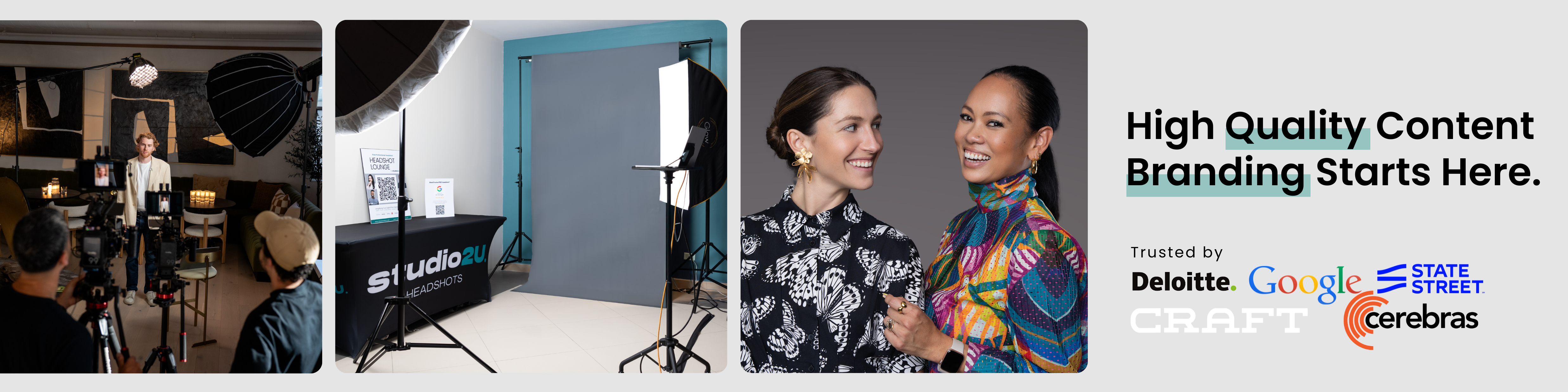
Tell us the announcement date and the number of people to photograph, and we will plan the shoot backward from it. You can also start from our services overview.
A press kit is a focused collection supporting one announcement, such as a product launch, and it changes often. A media kit is broader, covering company history, past coverage and audience details, and is updated periodically. For a launch you want the press-kit approach, with a few evergreen media-kit items such as logos and bios.
Have it published and tested before the release goes out, so the first reporter who clicks finds everything. Photography and video take the longest, so book them first. With a five-day turnaround from us, a shoot can fit into a tight launch calendar.
It is not required, but it helps. Cision reports that journalists value multimedia and most use PR-provided material to supplement coverage. A short founder or product video gives reporters something they can embed or cut from.
A web page on a permanent URL is the better base because people can find it and you can update it. A downloadable bundle of the same assets is a useful companion for recipients who prefer offline files.
