One-Day On-site Headshots: Templates & Proofs for Corporate Organizers
%20(1)%201.png)
.png)
.png)
August 9, 2026
%20(1).jpg)

PR and branding photos are strategic business assets, not decorative content. Schedule a one-day brand shoot to build a press-ready image library, then include those images in every press release and pitch you send. A single well-planned session can yield founder portraits, executive headshots, team lifestyle shots, product-in-context images, and press-ready exports — enough to fuel six to twelve months of PR, social media, investor decks, and hiring campaigns.
Pro Tip: Plan your shoot around your content calendar. Align it with a fundraising announcement, product launch, or conference appearance so every image has an immediate deployment purpose.
Professional PR and branding photos are the fastest way to reduce editorial friction, build investor credibility, and generate a reusable visual asset library from a single production day.
| Point | Details |
|---|---|
| Schedule before milestones | Book your shoot two to three weeks before a fundraise, launch, or conference for maximum deployment impact. |
| Build a complete press kit | Include a hero image, alternate crops, headshots, product shots, captions, credits, and a permanent download link. |
| Refresh every 6–12 months | Update assets after leadership changes, rebrands, or major product launches to keep imagery current. |
| Own your usage rights | Confirm copyright assignment or license scope in writing before the shoot; editorial and commercial uses require different terms. |
| studio2U delivers in five days | On-site production nationwide with press-ready packaging, metadata, and fast turnaround built for startup timelines. |
Branding photography is a planned, coordinated library of images that communicates brand identity and produces consistent recognition across every marketing channel. That consistency compounds over time: every published image strengthens branded search and makes the next PR cycle easier.
The speed at which visuals work is the first reason to prioritize them. Images shape perception faster than text — industry-cited figures indicate the brain processes images in milliseconds and that people recall significantly more information when it is paired with visuals than when it is text alone. Editors, investors, and hiring managers form first impressions before they read a single word of your pitch.
The business outcomes follow directly from that speed:
For startups specifically, the gap between “we have great technology” and “investors and press believe us” is often a visual one. Professional branding photos close that gap before a conversation starts.
Strategic brand shoots are planned to deliver a system of images across multiple categories, with consistent editing and compositional rules for reuse across channels. Here is what belongs in every startup’s image library:
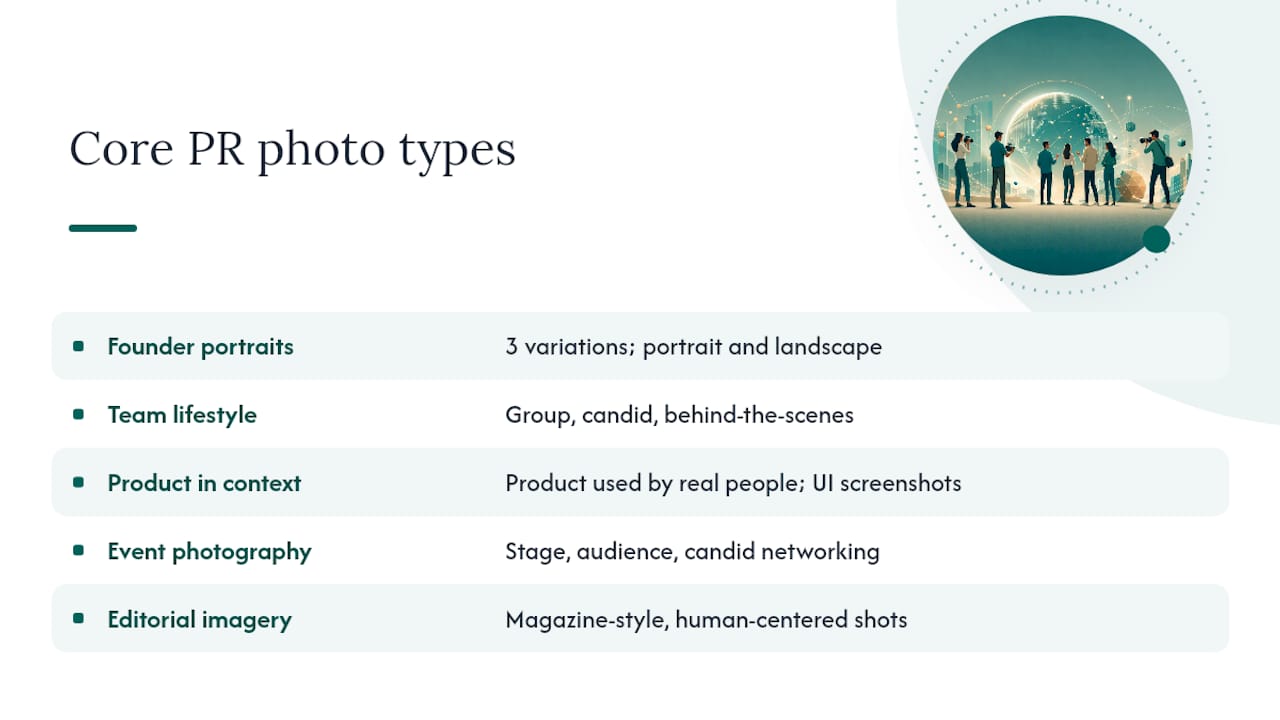
Founder portraits and executive headshots Shoot at least three variations per person: formal (clean background, direct eye contact), approachable (slight smile, relaxed posture), and environmental (in the office or workspace). Capture both portrait and landscape orientations. Landscape crops work for press mastheads and website banners; portrait crops work for LinkedIn, speaker bios, and investor decks.
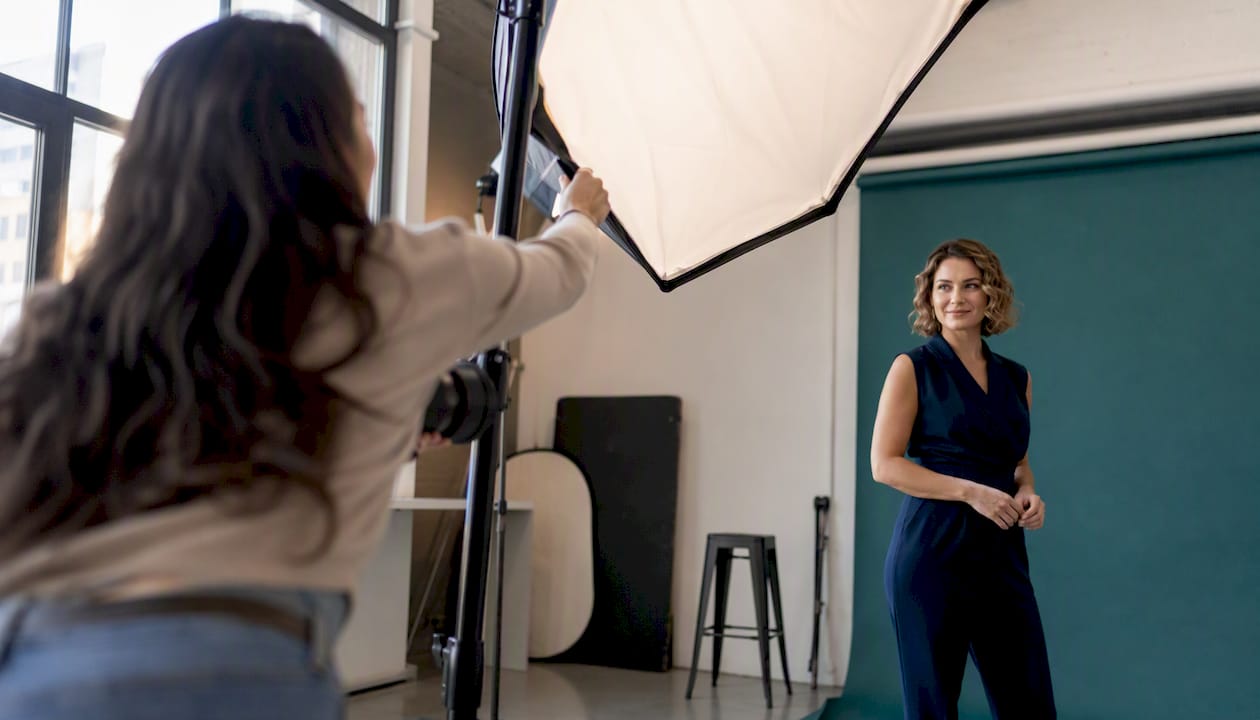
Team and workplace lifestyle photos Group shots for the “About” page, candid action shots of people collaborating, behind-the-scenes workspace details. These images do the heaviest lifting for hiring campaigns and culture storytelling. Pair them with an employer brand video for maximum recruiting impact.
Product-in-context and UI/screenshot images Show the product being used by a real person in a real setting. For software companies, device mockups with actual UI screenshots are press-friendly and investor-deck ready. Avoid floating product images on white backgrounds unless you also have context shots.
Event, launch, and editorial-style imagery Stage shots, audience reaction, candid speaker moments, and networking coverage. These images support press coverage of announcements and conferences. Event highlight content extends the shelf life of every event you attend or host.
Editorial-style imagery Loosely composed, human-centered shots that feel like magazine photography rather than corporate marketing. Editors prefer human-centered, subtly branded imagery over overtly commercial images. These are the shots that get published.
Press photos are curated, publication-ready images packaged for journalists and publishers to reduce editorial friction and improve accuracy in coverage. The typical editorial workflow runs: pitch → preview image → asset request → publication. Press-ready photos shorten every step.
When an editor receives a pitch with a strong hero image already attached, the decision to run the story becomes faster and easier. No asset request means no delay. No delay means your story runs while the news is still current.
Pro Tip: Embed a low-resolution preview image directly in your pitch email so editors can see it immediately, then link to the full-resolution file on a permanent shared folder. Never attach a large high-res file to an email.
When submitting images to media, include both portrait and landscape variants, provide captions and credits, and send high-resolution files via a permanent shared link rather than embedding large files in email. These are the non-negotiables:
Technical standards
Captioning and credit conventions
Legal basics
Governance A single-source asset library with an approval workflow prevents outdated or off-brand images from circulating. One person on the marketing or PR team should own the library and control what gets distributed.
Pro Tip: Embed IPTC metadata (caption, credit, copyright, usage terms) directly into every image file before distribution. Editors who strip attachments from emails still get the credit information.
A clear brief produces better images and fewer reshoots. Organize your shot list by category, specify orientations and intended uses, and confirm deliverables before the shoot day.
Deliverables to confirm in writing: minimum image counts per category, high-res originals, web-optimized exports, embedded captions and metadata, signed usage rights documentation.
Timeline: allow two to four weeks for planning and approvals, one shoot day, and one to five business days for selection and retouching depending on your vendor.
Pro Tip: Prioritize hero images and press-ready landscape crops first. These are the images editors reach for immediately. Everything else can be delivered in a second round.
The technical and compositional requirements for PR headshots differ from standard corporate portraits. Press editors need images that work at small sizes in a byline and at large sizes in a feature spread.
Styling and wardrobe Match clothing to brand positioning. A fintech founder in a sharp blazer reads as authoritative. A consumer-app founder in a clean crew-neck reads as approachable. Avoid busy patterns, loud logos, and anything that dates quickly. Solid colors photograph cleanest. For detailed corporate headshot attire guidance, the choices matter more than most founders expect.
Composition and lighting Natural light or soft studio light both work. The key is avoiding harsh shadows under the eyes and chin. Leave negative space on one side for text overlay in press layouts. Relaxed posture and a slight lean forward read as engaged rather than stiff.
Orientation and crop recommendations
Common mistakes to avoid
Pro Tip: Shoot a “talking head” setup in addition to still portraits. A short video clip from the same session gives you LinkedIn video content and B-roll for a founder story video without a second production day.
A press kit that arrives complete and organized gets used. One that requires follow-up emails gets ignored.
Press kit structure
File naming convention
Use descriptive, lowercase, hyphenated names: companyname-founder-portrait-2026-hires.jpg and companyname-product-context-landscape-web.jpg. Avoid generic names like IMG_4521.jpg — editors file and search assets by name.
Metadata Embed IPTC/XMP fields: caption, credit, copyright year, usage rights, and contact URL. This information travels with the file even when it is downloaded and re-uploaded.
Delivery methods Embed a low-res preview (72 DPI, under 1 MB) directly in the pitch email. Link to the full-resolution folder on a permanent shared drive — Google Drive, Dropbox, or a brand portal. Enterprise media-asset portals are the standard model for large organizations; startups can replicate the same structure with a shared folder and a clean index page.
For managing and comparing brand-asset platforms, a comparison of Bynder vs. Brandfolder covers the key differences for growing teams.
Pro Tip: Never take down your press photo folder. Journalists file stories weeks after receiving a pitch. A broken link means a missed placement.
Pricing for professional branding photography in the United States varies by team size, number of locations, retouching depth, and usage rights included. Single-session headshot programs for small teams typically start in the hundreds of dollars per person range; comprehensive branding shoots covering lifestyle, product, and executive portraits for a growth-stage startup run from several thousand dollars to the low five figures depending on scope and vendor.
What drives cost up: multiple locations, large teams, extensive retouching, expedited delivery, and broad commercial usage rights. What keeps cost manageable: a clear shot list, a single location, and a vendor who packages multiple deliverable types in one session.
Custom photography typically outperforms stock imagery in engagement and delivers measurable ROI when deployed across marketing and PR channels. A reusable library also reduces the cost of repeated shoots over time, since you are building an asset base rather than licensing images you never own.
Recommended refresh cadence for startups:
Budgeting approach: treat a single strategic session as a content investment, not a one-time expense. A well-scoped shoot can produce 50–100 usable images if planning, shot lists, and styling are clear. Those images serve PR, social, website, investor decks, and hiring simultaneously.
studio2U’s model is built around one constraint startups consistently face: timing. Announcements, fundraises, and product launches happen on compressed schedules, and visual assets that arrive two weeks late miss the moment entirely.
The workflow starts before the shoot day. studio2U conducts strategic discovery to understand the company’s narrative, the intended audience, and the specific channels where images will be deployed. Shot lists are built around business objectives, not generic photography categories. On shoot day, a portable studio comes to the client’s office, minimizing disruption and keeping the environment authentic.
Typical deliverables from a studio2U engagement include:
That packaging directly reduces editorial friction. When a journalist receives a studio2U-produced press kit, the images are already captioned, credited, and sized for publication. No follow-up required.
studio2U’s nationwide, on-site production model means a startup in Austin gets the same asset quality and packaging standard as an enterprise client in New York — portable studios, consistent editing workflows, and fast delivery regardless of location.
The outcome for clients is a library of visual assets that works across every channel simultaneously: the same session produces the hero image for a TechCrunch pitch, the LinkedIn banner for the CEO, the team photo for the careers page, and the product shot for the Series B deck.
Pro Tip: Book your studio2U shoot two to three weeks before a major announcement. That window covers planning, shoot day, retouching, and delivery with time to spare for press kit assembly.
Talent and location releases cover who appears in an image and where it was taken. Usage rights govern what you can actually do with the image after it is delivered, and this is where most startups run into problems.
Copyright ownership. In the United States, the photographer holds copyright by default unless a written work-for-hire agreement or explicit copyright assignment transfers ownership to the client. Confirm in writing before the shoot whether you are licensing the images or owning them outright. The distinction matters when you want to sublicense images to a media partner or use them in paid advertising.
License scope. A license should specify: media types (digital, print, broadcast), geographic territory (US only vs. worldwide), duration (one year, perpetual), and permitted uses (editorial, commercial, advertising). An image licensed for editorial use cannot legally be used in a paid ad without a separate commercial license.
Distribution permissions. When you send press photos to journalists, you are granting them a limited editorial license to publish. Your caption and credit document should state this explicitly: “Licensed for editorial use with credit. Not for commercial reproduction.” This protects you if an image is repurposed without permission.
Third-party IP in frame. If your product images include third-party logos, artwork, or trademarked objects, those elements may require separate clearance. Software UI screenshots showing another company’s interface need legal review before press distribution.
Archival and deletion rights. Specify in your vendor contract how long the photographer retains original files and under what conditions they can use your images in their own portfolio. Many photographers include portfolio rights by default; negotiate this if confidentiality is a concern during a pre-announcement period.
The single thing editors look for before everything else is clarity of subject. Not technical perfection, not brand consistency, not even resolution. If the image communicates one clear idea in under two seconds, it gets used. If it requires interpretation, it gets passed over.
The most common mistake PR teams make is submitting images that are visually busy: too many people, too much background detail, too many branded elements competing for attention. The corrective is simple. Before finalizing your shot list, ask for each image: “What is the one thing this photo is about?” If the answer takes more than five words, the composition needs to be tighter.
Authenticity is the second filter. Staged, over-lit, everyone-smiling-at-the-camera images read as advertising. Editors know the difference, and so do readers. The images that get picked up and shared are the ones that feel like they captured something real.
Most startups treat photography as a checkbox. studio2U treats it as a revenue-generating asset. The difference shows up immediately: when your next fundraise closes or your product ships, you have a complete press kit ready to send, not a frantic search for a photographer with availability.
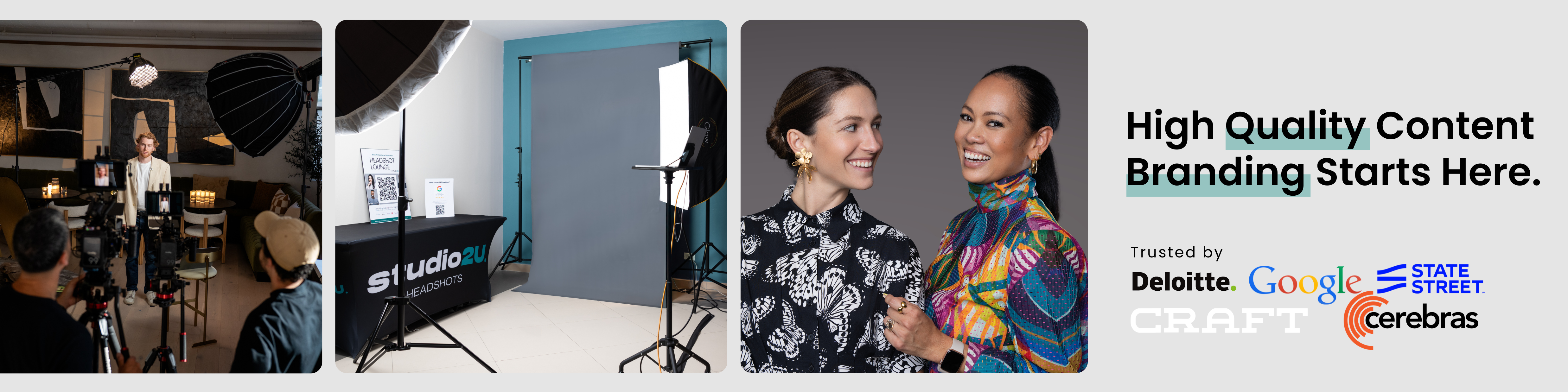
studio2U brings a portable professional studio directly to your office, anywhere in the United States. One session produces executive headshots, founder portraits, team lifestyle images, and product-in-context shots, all packaged with embedded metadata, captions, and both high-res and web-optimized exports. Delivery in five business days means your assets are live before the news cycle moves on.
For startups preparing for a fundraise, product launch, or media push, book a session with studio2U and leave with a press-ready image library built for the moment you are in.
The sources below back the claims in this article and provide templates, technical specs, and examples you can use directly.
A PR photoshoot produces curated, publication-ready images packaged for journalists and editors to reduce editorial friction and improve accuracy in media coverage. It typically includes executive headshots, founder portraits, team lifestyle shots, and product-in-context images delivered with captions, credits, and usage rights.
Pricing varies by team size, locations, retouching scope, and usage rights. Single-session headshot programs for small teams start in the hundreds of dollars per person; comprehensive branding shoots for growth-stage startups typically run from several thousand dollars to the low five figures.
PR amplifies a brand’s credibility by placing its story in trusted editorial outlets. Professional branding photos support that process by giving journalists ready-to-publish visuals that make coverage faster, more accurate, and more visually compelling.
A press kit should include a hero image in landscape orientation, two to three alternate crops, executive headshots, a product-in-context shot, a caption document with credit lines, and a permanent shared link to high-resolution files. Embed IPTC metadata in every file before distribution.
