One-Day On-site Headshots: Templates & Proofs for Corporate Organizers
%20(1)%201.png)
.png)
.png)
August 13, 2026
%20(1).jpg)

Commission these six assets first: a hero brand video, product demo clips, customer testimonial videos, founder and executive headshots, team and workplace photography, and product-in-use visuals. Together they cover every stage of the B2B buyer journey, from the first impression on your homepage to the final push on a pricing page.
Priority order by conversion impact:
Book a discovery call with a visual-branding partner before you brief anyone. Knowing your top-converting pages and your sales cycle length shapes every production decision.
The highest-ROI move for most B2B websites is commissioning product demo videos and customer testimonial videos first, then building a full visual library from a single planned shoot.
| Point | Details |
|---|---|
| Prioritize demos and testimonials | These two asset types deliver the fastest measurable ROI for B2B websites. |
| Plan shoots for multiple outputs | One 60-minute interview can yield a brand video, three testimonial clips, and six social shorts. |
| Match hero video format to audience | B2B sites perform better with click-to-play demos; only a quarter to a third of companies use a genuine hero video. |
| Brief for usage rights upfront | Written licensing terms and a deliverables checklist should be in every contract before the shoot. |
| studio2U delivers in five business days | Rapid post-production workflows mean headshot programs and brand packages ship while momentum is highest. |
Generic stock photography signals “we couldn’t be bothered.” Buyers notice, even when they can’t articulate why. Authentic, high-end visuals measurably increase credibility, engagement, and revenue when integrated with UX and conversion goals, while stock imagery actively undermines trust with professional buyers who see the same images on competitor sites.
The mechanism is straightforward. Real photography reduces perceived risk. A visitor who sees your actual office, your real team, and a genuine customer talking about results has far less reason to hesitate. Replacing stock with authentic headshots and workplace imagery removes the “sameness” problem that plagues B2B sites and humanizes the team for buyers who are evaluating vendors, not just products.
KPIs that move when you upgrade visuals:
For B2B companies, product demo videos and customer testimonial videos deliver the fastest measurable ROI. Brand films have a longer payback horizon. Start with the assets that touch your highest-traffic, highest-intent pages.
| Asset | Where it lives | Buyer-journey stage | Recommended format |
|---|---|---|---|
| Hero brand video | Homepage above the fold | Awareness | 6–12s autoplay loop or 60–90s click-to-play |
| Product demo video | Product/service pages | Consideration | 60s click-to-play |
| Customer testimonial video | Pricing page, case study pages | Decision | 30–90s per clip |
| Founder/executive headshots | About, homepage, press | Awareness + trust | High-res editorial portrait |
| Team photography | About/Team, careers | Consideration | Environmental, candid + formal |
| Workplace imagery | Homepage, About, recruiting | Awareness | Wide editorial shots |
| Product-in-use visuals | Product pages, landing pages | Consideration | Photo series + short clip |
Hero video adoption is uneven: only a minority of companies use a genuine hero video. B2B sites typically perform better with a click-to-play demo rather than an autoplay loop, because buyers want to choose when they engage. A founder story placed above the fold on a SaaS homepage can reduce bounce on that page by giving visitors a reason to stay past the headline.
Pro Tip: Place a customer testimonial video above the fold on your pricing page, not below it. Visitors who reach pricing are already interested. A 45-second clip of a real customer describing a specific outcome addresses the last objection before they click away.
A founder story video belongs on the About page and in investor materials. It does something a bio paragraph cannot: it shows conviction, personality, and the “why” behind the company in under two minutes.
One shoot, planned correctly, can produce assets for your website, LinkedIn, sales decks, investor presentations, PR pitches, email campaigns, and paid ads. The key is briefing for outputs, not just deliverables.
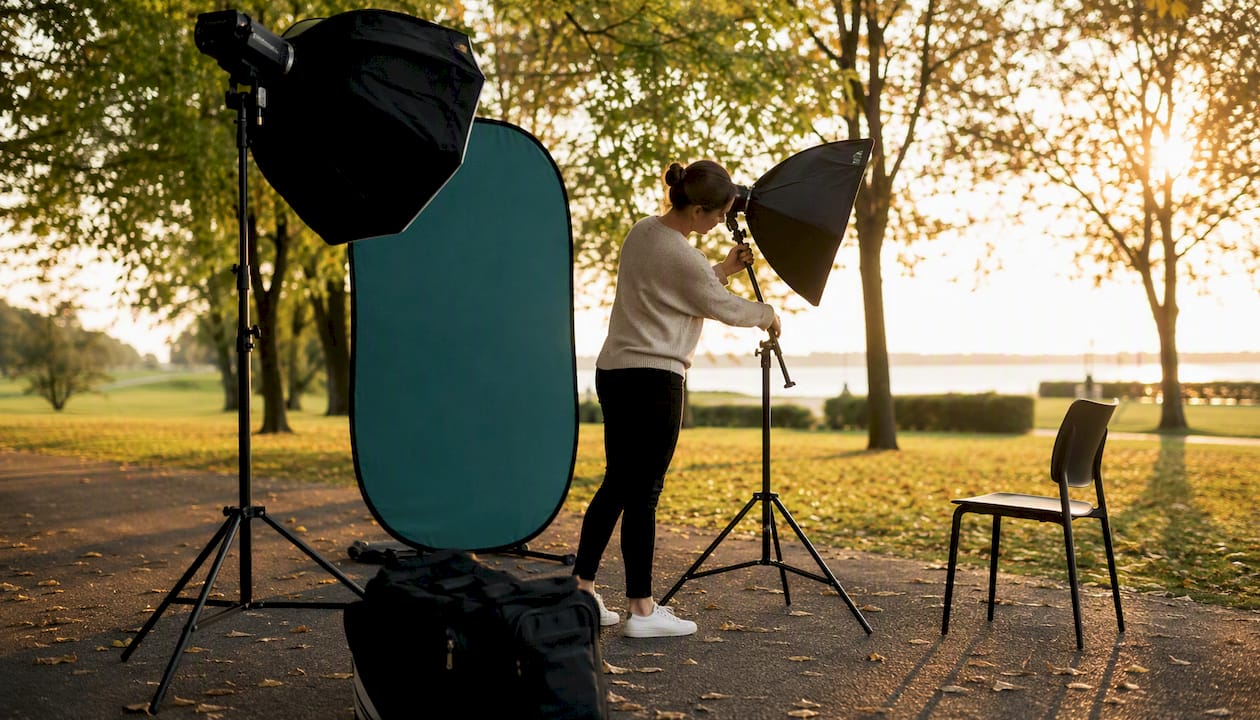
A single 60-minute executive interview, for instance, yields: a 90-second brand video, three 30-second testimonial clips, six 15-second social shorts, pull quotes for slide decks, and a transcript that feeds a blog post. Repurposing long-form footage into multiple short assets multiplies ROI and lowers the effective cost per asset significantly.
Treating events and conferences as content-production opportunities follows the same logic. Plan for high-quality capture of demos, panels, and candid interactions and you leave with a months-long asset library, not just a recap video.
A consistent visual system across touchpoints signals authority and helps buyers and internal champions close deals faster. That means your website hero, your sales deck cover, your LinkedIn banner, and your email signature all feel like they came from the same shoot.
File-spec checklist for your library:
[ClientCode]_[AssetType]_[Date]_[Version].extAppoint a creative owner, typically your Head of Brand or Creative Director, to enforce visual consistency. Without one person accountable for the library, assets drift and the “sameness” problem reappears internally. For managing the library itself, tools like Bynder or Brandfolder keep files organized and accessible; a comparison of both platforms can help you choose the right fit.
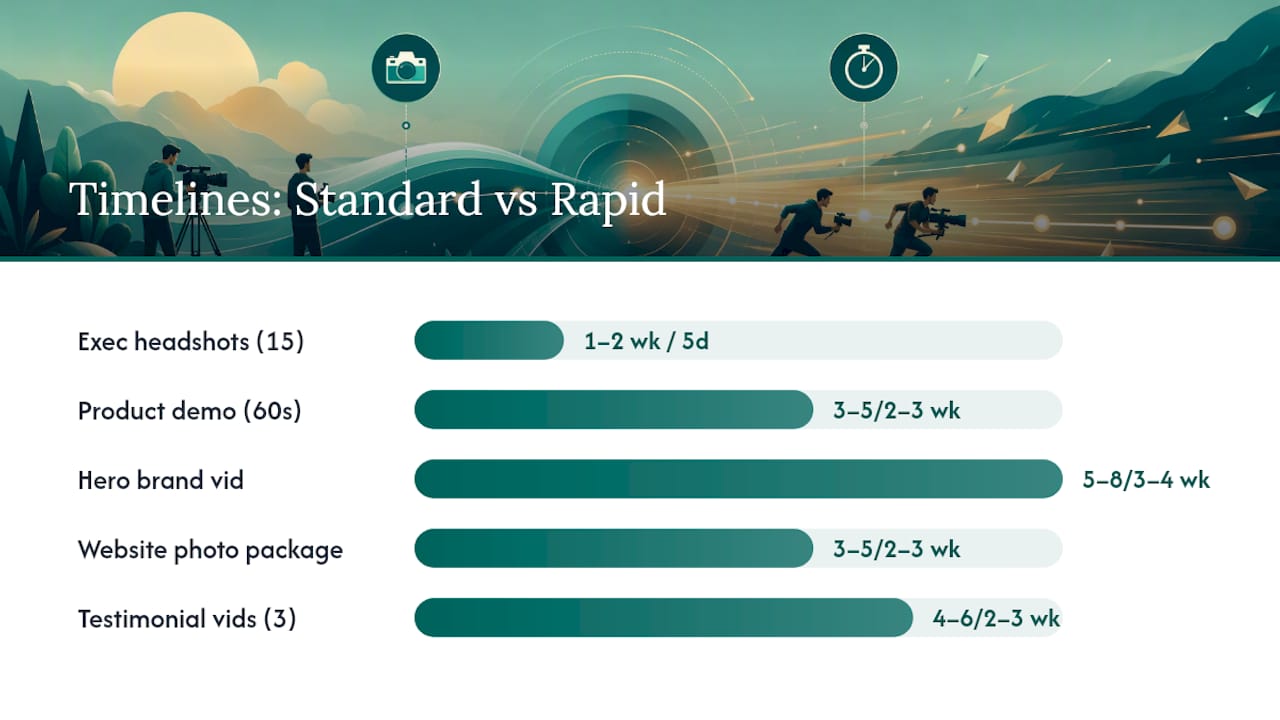
End-to-end production for a full website visual package typically runs 4–8 weeks: one to two weeks of preproduction, one to two shoot days, and two to four weeks of post-production. Fast-turn options compress that significantly.
| Deliverable | Standard timeline | Rapid delivery |
|---|---|---|
| Executive headshots (team of 15) | 1–2 weeks | 5 business days |
| Product demo video (60s) | 3–5 weeks | 2–3 weeks |
| Hero brand video (60–90s) | 5–8 weeks | 3–4 weeks |
| Full website photo package | 3–5 weeks | 2–3 weeks |
| Customer testimonial video (3 clips) | 4–6 weeks | 2–3 weeks |
Pricing varies by crew size, number of locations, deliverables count, and usage licensing. A headshot program for a 15-person team in New York City, Chicago, or San Francisco runs differently than a multi-day brand shoot with multiple setups. Key cost drivers: number of shooting days, travel, post-production complexity, number of final exports, and whether you need full commercial licensing or internal-use rights only.
Deliverables checklist you should receive at project close:
A weak brief is the single biggest source of expensive reshoots. Before you send an RFP, lock down these discovery goals:
Questions to ask every vendor in your RFP:
Red flags: no written usage rights, vague deliverables (“a few videos”), no defined post-production standard, and a contract that lists only shoot days with no mention of revisions.
Pro Tip: Cap feedback rounds at two per asset in your contract. Open-ended revision cycles are where timelines collapse. Brief your internal stakeholders before the first cut arrives, not after.
For PR-ready headshots, confirm technical specs with your PR agency before the shoot, not after delivery.
Track these KPIs per asset, not just per page:
Simple A/B tests worth running:
For attribution, tag every video page with UTMs, fire a custom event on video play in Google Tag Manager, and track video-assisted pipeline in your CRM. Run each test for 30–90 days before drawing conclusions. Prioritize refreshes based on the pages with the highest traffic and the lowest conversion rates.
Every studio2U project starts with strategic discovery before a camera is unpacked. The questions are business questions: What does a buyer need to believe before they sign? Which page is losing deals right now? What does your best customer say that your homepage doesn’t?
studio2U brings portable studios and production teams on-site nationwide, serving clients in New York City, Chicago, San Francisco, Austin, Miami, and Boston. Portable studio systems mean visual consistency whether you’re shooting a 200-person enterprise team across three offices or a 12-person startup in a co-working space. Post-production workflows are built for speed: headshot programs deliver in five business days, and full brand packages move faster than most agencies quote.
The work is designed to multiply. One shoot produces website assets, LinkedIn content, sales deck imagery, investor materials, and recruiting visuals simultaneously. Clients in VC ecosystems and accelerator programs use the same production to serve both the portfolio company and the fund’s own brand.
The fastest way to close the gap between your product and how buyers perceive it is a single well-planned shoot. studio2U’s discovery process takes 30 minutes: you share your top pages, your team size, and your timeline, and the team returns a proposal with sample deliverables, turnaround options (including five-day rapid delivery for headshots), and written licensing terms.
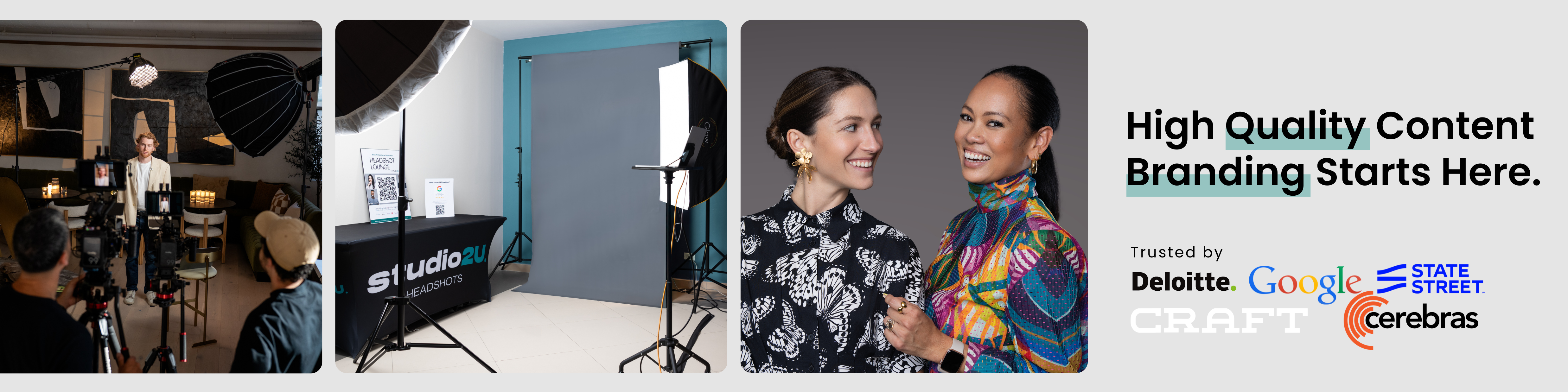
Come to the first call with three things: the pages you want to improve, the assets you’re missing, and a rough timeline. studio2U handles the rest, from narrative development through final delivery. Book your discovery call and get a proposal within 48 hours.
Start with customer testimonial videos and product demo videos. These two asset types are among the video formats reported to deliver ROI for B2B websites and directly support the consideration and decision stages of the buyer journey.
Headshot programs typically deliver in five business days with rapid post-production. A full hero brand video runs 5–8 weeks on a standard timeline, or 3–4 weeks with a fast-turn workflow.
Generally no. B2B buyers often prefer click-to-play demos over autoplay loops. Only a minority of companies use a genuine hero video, and the format that performs well for B2B is commonly a click-to-play demo lasting around one to one and a half minutes.
Tag video pages with UTMs, fire a custom play event in Google Tag Manager, and track video-assisted pipeline in your CRM. Run A/B tests for 30–90 days comparing pages with and without the video before drawing conclusions.
Written usage rights, a defined deliverables list with formats and specs, a stated number of revision rounds, turnaround SLAs, and signed model and property release forms. Missing any of these is a red flag.
